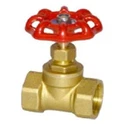
Hey there! As a supplier of brass globe valves, I often get asked about the different valve bonnet types of brass globe valves. So, I thought I'd write a blog post to share some insights with you all.
First off, let's understand what a valve bonnet is. The valve bonnet is an important part of a valve. It's like a cover that's attached to the valve body. Its main job is to enclose the valve stem, packing, and other internal components. This helps protect these parts from the environment and keeps the valve working properly.
Now, let's dive into the different types of valve bonnets for brass globe valves.
Screw - in Bonnet
The screw - in bonnet is one of the simplest and most common types. As the name suggests, it screws into the valve body. It's a pretty straightforward design. You just turn the bonnet in a clockwise direction, and it threads into place on the valve body.
One of the big advantages of a screw - in bonnet is its simplicity. It's easy to install and remove. This makes it easier for maintenance. If you need to access the internal parts of the valve, like for cleaning or replacing a seal, you can just unscrew the bonnet.


However, it also has some limitations. It's not great for high - pressure applications. The threaded connection can loosen under high pressure, which might lead to leaks. For lower - pressure systems, though, it's a cost - effective and practical choice. Some of our customers who use 200 WOG Globe Valve often opt for the screw - in bonnet type because these valves usually operate at relatively lower pressures.
Union Bonnet
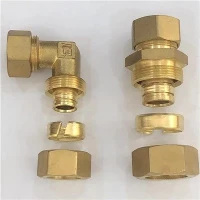
A union bonnet is another popular type. It uses a union fitting to connect the bonnet to the valve body. The union consists of three parts: a nut, a female end, and a male end. You can think of it like a detachable connection.
The great thing about a union bonnet is its flexibility. It allows for quick disassembly and reassembly. If you need to perform maintenance or repair work on the valve, you can easily separate the bonnet from the valve body without having to remove the whole valve from the pipeline. This is really useful in systems where downtime needs to be minimized.
Union bonnets are also suitable for a wide range of pressures. They provide a reliable seal, even at moderate to high pressures. Our customers who use brass globe valves in industrial settings often choose valves with union bonnets because of their durability and ease of maintenance.
Bolted Bonnet
Bolted bonnets are commonly used in more heavy - duty applications. In this design, the bonnet is attached to the valve body using bolts. There are usually several bolts evenly spaced around the perimeter of the bonnet - body connection.
The main advantage of a bolted bonnet is its high strength. It can withstand very high pressures and temperatures. It provides a very tight and secure seal, which is crucial in critical systems. For example, in some industrial processes where the fluid being controlled is under high pressure and there's no room for leaks, a bolted bonnet brass globe valve is often the go - to choice.
However, the downside is that it's more complex to install and remove compared to the screw - in or union bonnets. You need to use tools to loosen and tighten the bolts, and you have to make sure the bolts are tightened evenly to avoid leaks.
Welded Bonnet
Welded bonnets are used in special applications where a permanent and leak - proof connection is required. As the name implies, the bonnet is welded directly to the valve body.
This type of bonnet provides an extremely reliable seal. There's no chance of the bonnet coming loose, and it can handle very high pressures and harsh environments. It's commonly used in applications like oil and gas pipelines, where any leakage can have serious consequences.
But the welded bonnet has a major drawback. Once it's welded, it's very difficult to perform maintenance on the internal parts of the valve. If there's a problem inside the valve, often the whole valve needs to be replaced. That's why it's mainly used in applications where reliability is more important than ease of maintenance.
Choice Factors
When choosing the valve bonnet type for a brass globe valve, there are several factors to consider.
Pressure and Temperature: As I mentioned earlier, if you're dealing with high - pressure or high - temperature systems, you might want to go for a bolted or welded bonnet. For lower - pressure applications, a screw - in or union bonnet could be sufficient.
Maintenance Requirements: If you need to perform frequent maintenance on the valve, a union bonnet is a great choice because it allows for easy disassembly. If maintenance is rare, a welded or bolted bonnet can be more suitable.
Cost: Generally, screw - in bonnets are the most cost - effective option. Bolted and welded bonnets are more expensive due to the additional materials and the complexity of the installation.
We, as a brass globe valve supplier, offer valves with all these different types of valve bonnets. Whether you're looking for a PPR Brass Globe Valve with a union bonnet for a residential plumbing project or a high - pressure bolted bonnet brass globe valve for an industrial application, we've got you covered.
If you're in the market for a brass globe valve and aren't sure which valve bonnet type is right for your needs, don't hesitate to get in touch. We have a team of experts who can help you choose the most suitable valve based on your specific requirements. Whether it's for a small - scale project or a large - scale industrial system, we'll work with you to find the perfect solution.
If you want to discuss your procurement needs, just reach out. We're here to make the process as smooth as possible for you and ensure you get a high - quality brass globe valve that meets your expectations.
References
- Valve Handbook: A Guide to Valve Design and Application
- Industrial Valves: Operation, Maintenance, and Troubleshooting