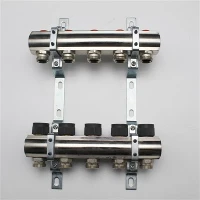
When I first started diving into the world of studying bifurcations on stainless steel (SS) manifolds, I’ll admit it felt like trying to untangle a jumble of pipes without a wrench—super overwhelming at first. But as a supplier who’s been helping folks get the right SS manifold solutions for years, I’ve learned that combining hands-on product know-how with solid bifurcation study methods makes the whole process way less scary. If you’re someone who’s working with fluid systems, HVAC, or plumbing and wants to wrap your head around how bifurcations act on these manifolds, this guide’s for you.
First, let’s get on the same page: what even are bifurcations in this context? For anyone not deep in thermo-fluid dynamics, a bifurcation is basically a point where a system’s behavior switches suddenly—think flow rate shifting, pressure spikes, or even temperature fluctuations that flip a whole system’s performance. And since SS manifolds are the backbone for splitting or merging fluid flow (hello, that’s exactly what they do), their geometry, material, and internal components directly affect where and how these bifurcations show up. That’s why studying them isn’t just math homework—it actually helps you pick the right manifold for your setup.
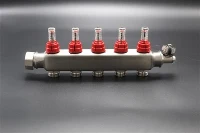
Let’s kick off with the basics: prepping your tools and materials, starting with the right manifold type. You can’t study bifurcations on just any SS manifold; you need one that fits your use case. For example, if you’re working on a radiant heat system, a 6 Loop Radiant Heat Manifold is ideal because its loop design lets you track flow through each circuit, making it way easier to spot bifurcation points. If you need to monitor flow in real time, a Stainless Steel Manifold With Flow Meter lets you collect hard data on how flow changes as pressure or temperature shifts—way better than guesswork. And for temperature-sensitive setups, a Stainless Steel Manifold With Temperature Control Valve Core helps you isolate how valve adjustments tie to bifurcation behavior, which is key for avoiding sudden system hiccups. Don’t sleep on material grade either: a 304 Stainless Steel Manifold is corrosion-resistant, so it won’t degrade over time and throw off your bifurcation measurements—way more reliable than lower grades for long-term studies.
Now, the actual study process. I’ve worked with engineers and hobbyists alike, and the most effective method is a mix of simulation and hands-on testing. Let’s break that down step by step. First, map your manifold’s geometry. Bifurcations don’t happen randomly—they depend on things like branch angles, pipe diameter ratios, and how smoothly the transitions are between the main supply line and the branches. I always tell people to start by pulling technical specs for their manifold (most suppliers, including us, have these on product pages) and noting details like whether branches are equal-sized or if there are reducers. For example, a manifold with 45-degree branch bends will have different bifurcation points than one with 90-degree bends—you can’t skip this step.
Next, run computational fluid dynamics (CFD) simulations. This is the part where you plug your manifold’s specs into software like ANSYS or OpenFOAM to visualize flow patterns. I get it—CFD can feel like rocket science, but there are free tutorials online that walk you through building a basic manifold model. When setting up, make sure to input boundary conditions that match your real system: inlet pressure, fluid type (water, glycol, whatever), and flow rate. The software will output things like velocity profiles and pressure contours, which will show you exactly where flow splits or reverses—those are your bifurcation points. For example, in a Stainless Steel Water Manifold (which is super common for residential HVAC), simulating different flow rates will show you where the main flow separates from the manifold walls, a classic bifurcation event that can lead to noise or inefficiency.
But simulations are only half the story—real-world testing is non-negotiable. Here’s where hands-on work comes in. Set up a test rig with your manifold, connect a pump to adjust flow rates, and install sensors (pressure gauges, temperature probes, even flow meters) at key points: inlet, each branch outlet, and any junction where branches split. Run tests at different flow rates, temperatures, and even fluid viscosities (if you’re dealing with something like oil instead of water) to see how bifurcation points shift. I’ve seen so many people skip this and just rely on CFD, but real-world conditions—like small imperfections in the manifold’s internal welding—can change results big time. For example, a tiny weld seam in a 304 Stainless Steel Manifold might create a micro-bifurcation that doesn’t show up in simulations, but it can cause flow turbulence in your actual system.
Once you have simulation and test data, it’s time to analyze the bifurcations. The key here is looking for “bifurcation thresholds” — that’s the exact flow rate or pressure where the system’s behavior switches. For example, you might notice that below 5 GPM, all branches get even flow, but above 5 GPM, one branch starts getting way more flow than the others—that’s your bifurcation point. Graphing your data helps a ton here; plot flow rate vs. pressure drop for each branch, and you’ll see a clear jump at the threshold. I always suggest keeping a log of these thresholds because they’ll help you size your manifold correctly. If you’re designing a system where consistent flow is critical, you’ll want to pick a manifold where your operating flow rate stays well below the bifurcation threshold.
Wait, but what about common pitfalls to avoid? Let me share some stuff I’ve learned from working with customers who messed up their studies. First, don’t ignore manifold size. A smaller manifold might have a bifurcation at a lower flow rate, so if your system runs at high flow, you need a larger model. For example, a 6 Loop Radiant Heat Manifold is bigger than a 2-loop one, so its bifurcation threshold is higher—perfect for systems with multiple circuits that need steady flow. Second, don’t forget about thermal effects. SS manifolds expand and contract with temperature, which can change branch alignment and shift bifurcation points. If you’re working with a Stainless Steel Manifold With Temperature Control Valve Core, make sure to test at the exact operating temperature of your system, not room temp. Third, don’t assume all bifurcations are bad—sometimes they’re predictable and even useful. For example, a controlled bifurcation can help you balance flow in a multi-branch system, so it’s not always something to avoid.


Now, how does this tie back to picking the right manifold for your project? Let’s tie it all together. If you’re studying bifurcations to optimize a commercial HVAC system, you might need a Stainless Steel Manifold With Flow Meter to track real-time flow as you adjust, paired with a 6 Loop Radiant Heat Manifold to handle multiple heating circuits without frequent bifurcation events. If you’re working on a residential plumbing system, a Stainless Steel Water Manifold made of 304 stainless steel will resist corrosion, so your bifurcation thresholds stay consistent over years of use. And if you’re dealing with temperature-sensitive applications, a Stainless Steel Manifold With Temperature Control Valve Core lets you tweak valves to shift bifurcation points where needed.
I know this sounds like a lot—studying bifurcations on SS manifolds isn’t trivial—but once you get the hang of it, it gives you super clear insight into how your system will perform. The key is to start with the right product, combine simulation and hands-on testing, and log every detail. If you’re still not sure which manifold is right for your study, or you have questions about running your tests, don’t hesitate to reach out. We’ve helped so many folks pick the perfect SS manifold for their fluid dynamics research and system designs, and we’re here to make sure you get the tools you need to nail your work.
If you’re ready to source a high-quality SS manifold for your bifurcation study, check out our full range at Stainless Steel Manifold With Flow Meter, Stainless Steel Water Manifold, Stainless Steel Manifold With Temperature Control Valve Core, 6 Loop Radiant Heat Manifold, and 304 Stainless Steel Manifold. We offer custom sizing too, so if you need a manifold tailored to your specific study needs, just get in touch to discuss your requirements.
References
- White, F. M. (2016). Fluid Mechanics (9th ed.). McGraw-Hill.
- Manopoulos, C., & Vrable, D. (2020). Bifurcation Analysis in Fluid Systems. Journal of Fluid Engineering, 142(8), 081401.
- ASHRAE. (2021). HVAC Applications Handbook: Hydronic Distribution. American Society of Heating, Refrigerating and Air-Conditioning Engineers.
- stainless steel manifold technical specifications, supplier product catalog (2024). Industrial Fluid Systems Association.