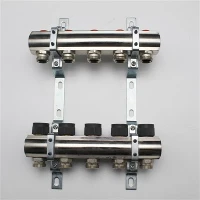
Hey everyone, it’s Jake here, and before we jump in—full transparency: I’ve been selling brass manifolds out of our warehouse in Chicago for the past 7 years. I get at least 3 calls a week from plumbers, HVAC techs, and even some DIY weirdos (no shade if you’re brave enough to tackle this yourself) asking the same basic question: “How do I actually measure these things without messing up?”
Turns out, a lot of people skip this part and either buy a manifold that’s way too big for the job, or one that’s missing half the fittings they need. Last month, we had a pro plumber come in because he ordered a switch valve manifold without checking the port spacing, and he had to drive 20 miles to get a replacement. Not fun for anyone, especially his guys who had to wait around on a job site. That’s why I decided to put together this quick, no-BS guide to measuring brass manifolds the right way—no fancy engineering degree required.
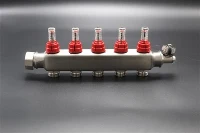
First off, let’s talk about the basics. A brass manifold, whether it’s a temperature control manifold or a four-way brass manifold, is basically the central hub that distributes water (or whatever fluid you’re working with) to multiple branches. Messing up its measurements means leaks, wasted time, and wasted cash for you. I’ve seen it all: someone measured the wrong thread size and had to scrap a whole batch, another guy didn’t account for the tail piece and couldn’t connect to his pipe. So let’s break this down step by step, no jargon, just what works in the real world.
First, grab your tools. You don’t need a $500 caliper (though if you already have one, that’s cool)—a cheap digital caliper from Amazon, a tape measure (the kind that doesn’t get stuck halfway, trust me), a thread gauge (super important, don’t skip this), and a notebook (or your phone notes app, no judgment). That’s it. No need for a lab coat, I promise.
Now, the most important measurements—these are the ones that get you in trouble if you get them wrong. Let’s start with port spacing. Port spacing is the distance between two adjacent inlet or outlet ports, right? This is non-negotiable. If your ports are spaced wrong, you can’t connect your pipes. How do you measure this? Don’t just eyeball it. Grab your digital caliper, zero it out, then measure from the center of one port’s inner edge to the center of the next port’s inner edge. Wait—wait, make sure you’re measuring the right thing. Some people measure from the outer walls, and that’s a disaster. Let’s use a example: if you’re working on a typical heating system, the ports might be spaced 4 inches apart, but if you measure wrong, you’ll end up with holes that don’t line up. I keep a cheat sheet taped to our warehouse wall for common residential manifold port spacing, but for custom jobs, you’ve gotta measure every single one. Oh, and if you’re dealing with a flowmeter manifold, those port spacings are extra precise because the meter has to fit just right—so don’t cut corners here.
Next up: port size and thread type. This is where a lot of new folks mess up. Just because two ports look the same doesn’t mean they are. Brass manifolds use different thread sizes—usually NPT (National Pipe Thread) or BSP (British Standard Pipe), depending on where you’re located. How do you check? Use a thread gauge. This little tool has different notches that fit exactly onto threads, so you can see if it’s ½ inch, ¾ inch, whatever. If you don’t have a thread gauge, you can also measure the outer diameter of the thread with your caliper, but that’s less accurate. Pro tip: if you’re working in the US, 90% of residential manifolds use NPT threads. If you’re dealing with something industrial, it might be BSP, so double-check. Last quarter, a guy ordered a manifold with the wrong thread type and had to return it—cost him $100 in shipping and a day of his time. Don’t be that guy.
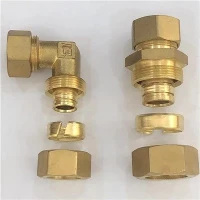
Then there’s the overall dimensions of the manifold. That’s total length, width, height. Why does this matter? Well, if you’re fitting it in a tight space (like under a sink or in a crawl space), you need to make sure the whole thing will actually fit. Don’t just measure the ports—measure the outside edges, including any protruding parts like the tail pieces. Speaking of which, manifold tail pieces—those are the little threaded ends that connect the manifold to your pipes, right? Measuring those is just as important. You need to know how long each tail piece is, and its thread size. A lot of people forget about tail pieces and then realize they’re too short to reach their pipe fittings. We sell all kinds of manifolds with standard tail pieces, but if you need custom length, just tell us the numbers when you order.


Wait, what about specialized manifolds? Like a four-way brass manifold—those are for systems that need four separate outlets, so their measurements are a bit different because there are more ports. You still measure port spacing and thread size the same way, but you’ve got to make sure all four ports are evenly spaced, otherwise the pipes will cross. Temperature control manifolds have extra ports for sensors, so you need to measure those too—don’t miss those small sensor ports, they’re easy to overlook. And switch valve manifolds—those have valves that move, so you need to make sure the valve actuator has enough space to move without hitting anything. I once had a customer install a switch valve manifold in a tight spot and the valve couldn’t turn all the way—had to tear out the whole thing, no fun.
A quick check: after you take all these measurements, write them down and double them. I know, it’s annoying, but it takes 2 minutes and saves you hours of headache. Let’s go over the key points again so you don’t mix them up: 1) Port spacing (center to center, for every port), 2) Port size and thread type (use a thread gauge if you can), 3) Overall manifold dimensions (length, width, height, including tail pieces), 4) For specialized manifolds: account for extra features like valve actuators or sensor ports.
Wait, what if you already have a brass manifold and you need to replace it? Same process—measure the old one. Just be careful when you take it off, don’t damage the threads, because if the old one is still good, you can use it to match. If you’re ordering a new one, just send us the measurements (we love when customers have their stuff measured right) and we can get you the right part fast.
At the end of the day, measuring a brass manifold isn’t rocket science. It’s just paying attention to the details. We’ve been doing this for years, and we’ve helped thousands of guys get the right manifold for their job—whether it’s a switch valve manifold for a small bathroom remodel or a four-way brass manifold for a commercial HVAC system. If you’re not sure about your measurements, or you have any questions, just reach out—we’re here to help. Don’t guess, don’t eyeball, get the numbers right, and you’ll save yourself a ton of trouble.
If you’re in the market for a brass manifold, we stock a huge range of options right here—from the common manifold tail pieces you need to wrap up your install to specialized ones that fit tricky industrial jobs. Just send us your specs, and we’ll hook you up. No hidden fees, no weird fine print, just good old-fashioned service. Got any stories about measuring manifolds gone wrong? Drop them in the comments below—we’d love to hear them.
References
- Plumbing-Heating-Cooling Contractors Association. (2022). “Standard Measurement Practices for Hydronic Manifold Systems.”
- American National Standards Institute. (2021). “Specification for Pipe Threads, General Purpose (NPT).”
- Our in-house customer service database: 7 years of solving manifold measurement mistakes.