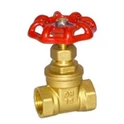
What is the thermal expansion coefficient of a brass valve body?
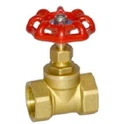
As a dedicated supplier of brass valve bodies, I often encounter questions from customers regarding the thermal expansion coefficient of these crucial components. Understanding this property is essential for various applications, as it can significantly impact the performance and durability of brass valve bodies in different operating conditions.
Brass is an alloy primarily composed of copper and zinc, with varying proportions of other elements that can be added to enhance specific properties. The thermal expansion coefficient of a material is a measure of how much it expands or contracts when subjected to a change in temperature. It is typically expressed in units of length per unit length per degree Celsius (or Kelvin), such as µm/m·°C.
The thermal expansion coefficient of brass can vary depending on its exact composition. Generally, the coefficient for common brass alloys ranges from approximately 18 to 20 µm/m·°C. This value indicates that for every one-degree Celsius increase in temperature, a brass valve body will expand by about 18 to 20 micrometers per meter of its original length.


This property has several important implications for the use of brass valve bodies. In applications where temperature fluctuations are significant, such as in industrial processes or heating systems, the thermal expansion of the valve body must be taken into account to prevent issues such as leakage, distortion, or failure. For example, if a brass valve body is installed in a pipeline and the temperature of the fluid flowing through it increases, the valve body will expand. If the expansion is not properly accommodated, it can cause stress on the valve components and the surrounding piping, leading to potential leaks or damage.
To address these concerns, engineers and designers often use expansion joints or flexible connections in the piping system to allow for the thermal expansion of the brass valve body. Additionally, proper installation techniques and the selection of appropriate materials for the valve components and gaskets can help to minimize the effects of thermal expansion.
In some cases, the thermal expansion coefficient of brass can also be an advantage. For example, in applications where a tight seal is required at high temperatures, the expansion of the brass valve body can help to improve the sealing performance. However, this requires careful design and engineering to ensure that the expansion does not cause excessive stress or damage to the valve.
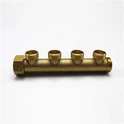
At our company, we offer a wide range of brass valve bodies, including External Thread Three-way Valve Body, Brass Double Valve Body, and Water Heater Three-way Elbow Joint. Our products are manufactured using high-quality brass alloys with carefully controlled compositions to ensure consistent thermal expansion properties. We also work closely with our customers to understand their specific application requirements and provide customized solutions to meet their needs.
When selecting a brass valve body, it is important to consider not only the thermal expansion coefficient but also other factors such as corrosion resistance, pressure rating, and flow characteristics. Our team of experts can provide technical support and guidance to help you choose the right valve body for your application.
In conclusion, the thermal expansion coefficient of a brass valve body is an important property that must be considered in the design, installation, and operation of valve systems. By understanding this property and taking appropriate measures to accommodate thermal expansion, you can ensure the reliable performance and longevity of your brass valve bodies.
If you are interested in learning more about our brass valve bodies or have any questions regarding their thermal expansion properties, please do not hesitate to contact us. We look forward to discussing your requirements and providing you with the best solutions for your needs.
References
- ASM Handbook, Volume 2: Properties and Selection: Nonferrous Alloys and Special-Purpose Materials, ASM International
- Perry's Chemical Engineers' Handbook, McGraw-Hill Education