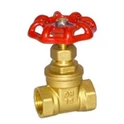
When it comes to fluid control systems, valves play a crucial role. Among the various types of valves, the globe valve is widely used due to its excellent throttling and shut - off capabilities. As a supplier of 200 WOG Globe Valve, I have had in - depth experiences and knowledge about the relationship between a valve's size and its flow capacity.
Understanding Valve Size
The size of a valve is typically denoted by its nominal pipe size (NPS) or its metric equivalent. For example, a 1 - inch valve is designed to be connected to a 1 - inch pipe. The physical dimensions of the valve, such as the diameter of the valve body, the length, and the size of the internal components, are all related to this nominal size.
The valve size affects not only its physical fit within a piping system but also its internal flow path. A larger valve generally has a wider flow passage, which seems to imply that it can handle more fluid. However, the relationship between size and flow capacity is not as straightforward as it might appear at first glance.


Factors Affecting Flow Capacity
Flow capacity is measured in terms of the volume of fluid that can pass through the valve per unit of time, usually in gallons per minute (GPM) or cubic meters per hour (m³/h). Several factors influence a valve's flow capacity, and the valve size is just one of them.
Valve Design
The internal design of the globe valve significantly impacts its flow capacity. A well - designed valve will have a smooth and streamlined flow path, reducing turbulence and pressure drop. In contrast, a poorly designed valve may cause the fluid to flow in a chaotic manner, increasing resistance and reducing the overall flow rate. For instance, some globe valves have a more conical or spherical plug design, which can provide better flow characteristics compared to others.
Valve Trim
The valve trim refers to the internal components of the valve that come into direct contact with the fluid, such as the plug, seat, and stem. The size and shape of the valve trim can have a major impact on flow capacity. A larger trim can allow more fluid to pass through, but it also needs to be properly matched with the valve body size. If the trim is too large for the valve body, it may cause excessive pressure drop and reduce the efficiency of the valve.
Pressure Drop
Pressure drop is the difference in pressure between the inlet and the outlet of the valve. As fluid flows through the valve, it encounters resistance, which causes a decrease in pressure. A higher pressure drop means that more energy is required to push the fluid through the valve. The valve size can affect the pressure drop. A smaller valve will generally have a higher pressure drop for the same flow rate compared to a larger valve, as the fluid has to pass through a narrower passage.
The Relationship between Valve Size and Flow Capacity
In general, as the valve size increases, the flow capacity also increases. This is because a larger valve has a larger internal cross - sectional area, allowing more fluid to pass through. However, this relationship is not linear.
Let's take a look at some practical examples. A 1/2 - inch 200 WOG Globe Valve will have a much lower flow capacity compared to a 2 - inch valve. The 1/2 - inch valve is suitable for applications where the flow rate is relatively low, such as in small - scale plumbing systems or in some laboratory setups. On the other hand, a 2 - inch valve can handle a much larger volume of fluid and is often used in industrial applications where high - flow rates are required.
However, simply increasing the valve size is not always the best solution. If a valve is oversized for a particular application, it may lead to problems. An oversized valve may not be able to control the flow accurately, as the valve may open and close too quickly, causing water hammer and other issues. Additionally, an oversized valve is more expensive and may require more space for installation.
Applications and Flow Capacity Requirements
Different applications have different flow capacity requirements. For example, in a residential plumbing system, the flow capacity requirements are relatively low. A PPR Brass Globe Valve with a small size, such as 1/2 - inch or 3/4 - inch, is usually sufficient to control the flow of water in faucets, toilets, and other fixtures.
In industrial applications, such as in chemical processing plants or power generation facilities, the flow capacity requirements can be extremely high. Large - sized globe valves are often used in these applications to handle the high - volume flow of fluids. For example, a power plant may require a large - diameter globe valve to control the flow of steam or cooling water.
Selecting the Right Valve Size for the Required Flow Capacity
To select the right valve size for a specific application, it is essential to accurately calculate the required flow capacity. This involves considering factors such as the fluid properties (density, viscosity), the pressure of the system, and the desired flow rate.
Engineers often use flow coefficient (Cv) values to determine the appropriate valve size. The Cv value is a measure of the valve's flow capacity and is defined as the number of gallons per minute of water at 60°F that will flow through the valve with a pressure drop of 1 psi. By knowing the required flow rate and the pressure drop in the system, the appropriate Cv value can be calculated, and then the corresponding valve size can be selected.
For example, if you are designing a water supply system for a commercial building and you know that the required flow rate is 100 GPM with a pressure drop of 5 psi, you can calculate the required Cv value and then select a valve size that has a Cv value close to the calculated one.
Our 200 WOG Globe Valve Offerings
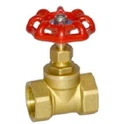
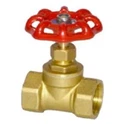
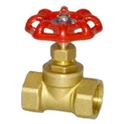
As a supplier of 200 WOG Globe Valve, we offer a wide range of valve sizes to meet different flow capacity requirements. Our Round Handwheel Brass Globe Valve 1/2" is a popular choice for small - scale applications where a relatively low flow rate is needed. It is made of high - quality brass, which provides excellent corrosion resistance and durability.
For larger - scale applications, we also offer larger - sized 200 WOG Globe Valves. These valves are designed to handle high - volume flows while maintaining a low pressure drop. Our valves are carefully engineered and tested to ensure that they meet the highest standards of quality and performance.
Conclusion
In conclusion, the relationship between the valve's size and its flow capacity is complex and influenced by multiple factors. While a larger valve generally has a higher flow capacity, other factors such as valve design, trim, and pressure drop also play important roles. When selecting a valve for a specific application, it is crucial to accurately calculate the required flow capacity and choose the valve size that best meets the needs of the system.
If you are in need of a reliable 200 WOG Globe Valve for your project, we are here to help. Our team of experts can assist you in selecting the right valve size and type based on your specific requirements. We invite you to contact us for more information and to start a procurement discussion.
References
- Crane Co., "Flow of Fluids Through Valves, Fittings, and Pipe," Technical Paper No. 410.
- ASME B16.34, "Valves - Flanged, Threaded, and Welding End."
- ISA - 75.01.01, "Flow Equations for Sizing Control Valves."