Hey there! As a supplier of Flowmeter Manifolds, I often get asked about the flow linearity of these nifty devices. So, let's dive right in and break it down.
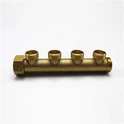
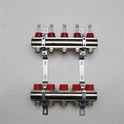
First off, what exactly is a Flowmeter Manifold? Well, it's a crucial component in many fluid - handling systems. It acts as a central hub that allows for the distribution, measurement, and control of fluid flow. Think of it like the traffic controller of a fluid system, directing the flow where it needs to go.
Now, onto the main topic: flow linearity. Flow linearity refers to the relationship between the actual flow rate of a fluid through the flowmeter manifold and the output signal that the manifold generates. In an ideal world, this relationship would be perfectly linear. That means if you double the flow rate of the fluid, the output signal from the manifold would also double.

Why is flow linearity so important? Well, accurate measurement is key in most fluid - handling applications. Whether it's in a chemical processing plant, an oil and gas refinery, or a water treatment facility, knowing exactly how much fluid is flowing through the system is crucial for safety, efficiency, and quality control. If the flowmeter manifold doesn't have good flow linearity, the measurements can be way off, leading to all sorts of problems.
Let's take a closer look at how flow linearity works in a Flowmeter Manifold. Inside the manifold, there are usually sensors that detect the flow of the fluid. These sensors can work in different ways, such as using differential pressure, thermal conductivity, or ultrasonic waves. When the fluid flows through the manifold, the sensors generate an electrical or mechanical signal that is proportional to the flow rate.
However, in real - world scenarios, achieving perfect flow linearity is a challenge. There are several factors that can affect the flow linearity of a flowmeter manifold. One of the main factors is the viscosity of the fluid. Viscosity is a measure of a fluid's resistance to flow. Fluids with high viscosity, like honey, flow more slowly and can cause more friction inside the manifold. This friction can distort the flow pattern and affect the accuracy of the sensor readings, leading to non - linearity in the flow measurement.
Another factor is the turbulence of the fluid. Turbulent flow occurs when the fluid moves in an irregular, chaotic manner. This can happen when the fluid is flowing at high speeds or when there are obstacles in the flow path. Turbulence can cause the fluid to mix and swirl, which can make it difficult for the sensors to accurately measure the flow rate. As a result, the flow linearity can be compromised.

The design of the Flowmeter Manifold itself also plays a big role in flow linearity. A well - designed manifold will have smooth internal surfaces and a carefully engineered flow path. This helps to minimize friction and turbulence, allowing the fluid to flow more evenly through the manifold. On the other hand, a poorly designed manifold may have sharp corners, rough surfaces, or improper bends, which can disrupt the flow and lead to non - linearity.
We also need to consider the calibration of the flowmeter manifold. Calibration is the process of adjusting the manifold to ensure that its output signal accurately reflects the actual flow rate. Over time, the sensors in the manifold can drift or become less accurate due to wear and tear, changes in environmental conditions, or other factors. Regular calibration is essential to maintain good flow linearity.
At our company, we take flow linearity very seriously. We use advanced manufacturing techniques and high - quality materials to design and produce Flowmeter Manifolds with excellent flow linearity. Our engineers conduct rigorous testing to ensure that each manifold meets the highest standards of accuracy and performance.
We also offer a range of related products, such as Switch Valve Manifolds and Manifold Tail Pieces. These products work in conjunction with our flowmeter manifolds to provide a complete fluid - handling solution. The switch valve manifolds allow for easy control of the fluid flow, while the manifold tail pieces help to connect the manifold to other components in the system.
If you're in the market for a high - quality flowmeter manifold or related products, we'd love to hear from you. Whether you're looking for a standard model or a custom - designed solution, we have the expertise and resources to meet your needs. Our team of experts can work with you to understand your specific requirements and recommend the best products for your application.

Don't hesitate to reach out to us for more information or to discuss your procurement needs. We're here to help you find the perfect fluid - handling solution for your business.
References
- "Fluid Mechanics" by Frank M. White
- "Flow Measurement Handbook" by Richard W. Miller