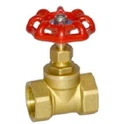
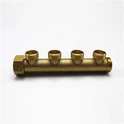
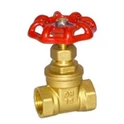
The flow rate capacity of a filter ball valve is a critical parameter that determines its efficiency and suitability for various applications. As a leading supplier of filter ball valves, we understand the importance of accurately assessing and understanding this characteristic. In this blog post, we will delve into the concept of flow rate capacity, explore the factors that influence it, and discuss how it impacts the performance of filter ball valves.
Understanding Flow Rate Capacity
Flow rate capacity, often referred to as flow coefficient (Cv), is a measure of a valve's ability to pass fluid through it. It is defined as the number of U.S. gallons per minute (GPM) of water at 60°F that will flow through a valve with a pressure drop of 1 psi across the valve. In simpler terms, it indicates how much fluid a valve can handle under specific conditions.
The Cv value is a crucial metric because it helps engineers and system designers select the right valve for a particular application. A valve with a higher Cv value can pass more fluid at a given pressure drop, while a lower Cv value means the valve restricts the flow more. For example, in a high - flow industrial process, a valve with a large Cv is required to ensure that the necessary volume of fluid can be transported efficiently.
Factors Affecting the Flow Rate Capacity of Filter Ball Valves
Valve Size
One of the most significant factors influencing the flow rate capacity is the size of the valve. Generally, larger valves have a higher flow rate capacity. This is because a larger valve opening allows more fluid to pass through. For instance, a 2 - inch filter ball valve will typically have a much higher Cv value than a 1/2 - inch valve. As the diameter of the valve increases, the cross - sectional area available for fluid flow grows exponentially, resulting in a substantial increase in the flow rate.
Ball Design
The design of the ball inside the valve also plays a crucial role. Full - port ball valves, where the ball has an opening equal to the pipe diameter, offer the least resistance to flow. This means they have a higher flow rate capacity compared to reduced - port ball valves. In a reduced - port ball valve, the ball opening is smaller than the pipe diameter, which restricts the flow and lowers the Cv value.
Seat Material and Design
The seat of the filter ball valve is the part that comes into contact with the ball to create a seal. The material and design of the seat can affect the flow rate. A smooth - surfaced seat made of a low - friction material allows for better fluid flow. Additionally, the way the seat is designed to interact with the ball can either enhance or impede the flow. For example, a well - designed seat that minimizes turbulence will contribute to a higher flow rate capacity.
Fluid Properties
The properties of the fluid passing through the valve, such as viscosity, density, and temperature, also impact the flow rate. Viscous fluids, like oil, flow more slowly than less viscous fluids, such as water. Higher - density fluids require more energy to move through the valve, which can reduce the flow rate. Temperature can also affect the fluid's viscosity and density, thereby influencing the valve's flow rate capacity.
Measuring the Flow Rate Capacity of Filter Ball Valves
To determine the flow rate capacity of a filter ball valve, manufacturers typically conduct flow tests. These tests involve passing a known volume of fluid through the valve at a specific pressure and measuring the resulting flow rate. The pressure drop across the valve is also measured. Using these measurements, the Cv value can be calculated using the following formula:
[C_v=\frac{Q}{\sqrt{\Delta P}}]
where (Q) is the flow rate in GPM and (\Delta P) is the pressure drop in psi.
Manufacturers then provide the Cv values in their product specifications. This information is invaluable for customers as it allows them to compare different valves and select the one that best meets their flow requirements.
Importance of Accurate Flow Rate Capacity in Filter Ball Valves
In applications where filter ball valves are used, accurate flow rate capacity is essential for several reasons.


Process Efficiency
In industrial processes, maintaining the right flow rate is crucial for the efficiency of the entire system. If the flow rate is too low, the process may not operate at its optimal capacity, leading to reduced productivity. On the other hand, if the flow rate is too high, it can cause excessive wear and tear on the valve and other components in the system.
Filtration Performance
Filter ball valves are often used in conjunction with filters. The flow rate capacity of the valve must be compatible with the filtration requirements. If the flow rate is too high, the filter may not be able to effectively remove contaminants from the fluid. Conversely, a very low flow rate may result in a longer processing time and reduced overall system efficiency.
Our Product Range and Flow Rate Capacities
As a filter ball valve supplier, we offer a wide range of products with different flow rate capacities to meet various customer needs.
Our Ball Valve with Cap 1/2" is a popular choice for applications where space is limited and a relatively low flow rate is required. Despite its small size, it is designed to provide reliable performance. The valve is made with high - quality materials and a well - engineered ball and seat design to ensure a reasonable flow rate within its size constraints.
For applications that require more precise temperature control and a moderate flow rate, our Ball Valve for Temperature Measurement is an excellent option. This valve is designed to balance the need for flow control and temperature - related functionality, with a carefully calibrated flow rate capacity.
In high - flow industrial and firefighting applications, our Fire Reel Ball Valve stands out. With its large size and full - port design, it offers a high flow rate capacity, ensuring that a large volume of water or other firefighting agents can be delivered quickly and efficiently.
Contact Us for Your Filter Ball Valve Needs
If you are in the market for filter ball valves and need to select the right one based on the flow rate capacity for your specific application, we are here to help. Our team of experts can provide detailed information about the flow rate capacities of our products, assist you in choosing the most suitable valve, and answer any technical questions you may have.
Whether you are involved in a small - scale plumbing project or a large - scale industrial operation, we have the right filter ball valve for you. Contact us today to start a discussion about your requirements and explore how our products can meet your needs. We look forward to partnering with you to ensure the smooth and efficient operation of your fluid - handling systems.
References
- Valve Handbook, Second Edition by Robert K. Linnell.
- Fluid Mechanics and Thermodynamics of Turbomachinery by S. L. Dixon and C. A. Hall.
- Industrial Valves: A Guide to Selection and Application by Tom Amos.