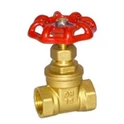
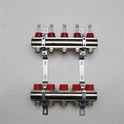
Hey there! As a supplier of SS manifolds, I often get asked a pretty interesting question: "Is an SS manifold a closed or open manifold?" It might seem like a technical jargon kind of question, but it's actually quite important, especially if you're in the market for these products. Let's dive right in and break it down.
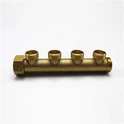
First off, let's understand what an SS manifold is. SS stands for stainless steel, and a manifold is a device that combines multiple inputs into one output or distributes one input into multiple outputs. They're used in a whole bunch of industries, like plumbing, HVAC, and even in some high - tech manufacturing processes. You can check out some of our products like the Stainless Steel Manifold With Flow Meter, 304 Stainless Steel Manifold, and Stainless Steel Water Manifold.
Now, onto the main question: closed or open?
Closed Manifolds
A closed SS manifold is designed in such a way that it forms a sealed system. There are no external openings other than the specific input and output ports that are carefully engineered. This type of manifold is great for applications where you need to maintain a specific pressure, temperature, or where you're dealing with substances that need to be contained.
For example, in a chemical processing plant, a closed SS manifold might be used to transport corrosive chemicals. The closed design ensures that there are no leaks, which could be extremely dangerous in that kind of environment. The sealed nature also helps in preventing contamination from the outside world. If you're working with pure substances or in a sterile environment, like in the pharmaceutical industry, a closed manifold is your go - to option.
Another advantage of closed manifolds is that they can handle higher pressures. Since the system is sealed, the pressure can be regulated more effectively. This makes them suitable for applications like high - pressure hydraulic systems. However, the downside is that they can be more difficult to maintain. If there's a blockage or a problem inside the manifold, it can be a real headache to access and fix it.


Open Manifolds
On the other hand, an open SS manifold has some degree of exposure to the external environment. It might have vents or openings that allow for air or other substances to enter or exit the system. Open manifolds are often used in applications where you need to release pressure or where you're dealing with substances that don't need to be completely contained.
In a plumbing system, for instance, an open SS manifold can be used to distribute water. The open design allows for any air bubbles in the system to escape, which helps in preventing water hammer and other plumbing issues. It's also easier to clean and maintain an open manifold. You can access the internal parts more easily, which is great if you need to remove debris or perform regular inspections.
However, open manifolds are not suitable for applications where you need to maintain a specific environment. They're more prone to contamination, and they can't handle as high pressures as closed manifolds. If you're working with flammable or toxic substances, an open manifold is definitely not the way to go.
Factors to Consider When Choosing
So, how do you decide whether a closed or open SS manifold is right for your application? Here are some factors to consider:
1. Substance Being Handled
If you're dealing with corrosive, toxic, or flammable substances, a closed manifold is usually the best choice. It provides the necessary containment to keep the environment safe. On the other hand, if you're working with something like water or air, an open manifold might be sufficient.
2. Pressure Requirements
As mentioned earlier, closed manifolds can handle higher pressures. If your application requires high - pressure operation, a closed manifold is the way to go. For low - pressure systems, an open manifold can work just fine.
3. Maintenance Needs
If you need easy access for maintenance and cleaning, an open manifold is more convenient. But if you can tolerate less frequent maintenance and need a more robust system, a closed manifold might be better.
4. Cost
Closed manifolds are generally more expensive to manufacture because of their sealed design and the materials required to ensure a proper seal. If cost is a major factor, you might want to consider an open manifold.
Our Experience as a Supplier
Over the years, we've supplied SS manifolds to a wide range of customers, each with their unique requirements. We've seen firsthand how the choice between a closed and open manifold can make or break a project.
For a local HVAC company, we supplied an open SS manifold for their air distribution system. The open design allowed for easy maintenance, and it was cost - effective for them. On the other hand, for a chemical research facility, we provided a closed SS manifold to handle some highly corrosive chemicals. The closed design ensured that there were no leaks, and the high - pressure capabilities of the manifold were exactly what they needed.
Making the Right Choice
In conclusion, whether an SS manifold is closed or open depends on your specific application. There's no one - size - fits - all answer. You need to carefully consider the factors we've discussed, such as the substance being handled, pressure requirements, maintenance needs, and cost.
If you're still not sure which type of SS manifold is right for you, don't hesitate to reach out. We're here to help you make an informed decision. We've got a team of experts who can analyze your requirements and recommend the best solution for your project. Whether you need a Stainless Steel Manifold With Flow Meter, a 304 Stainless Steel Manifold, or a Stainless Steel Water Manifold, we've got you covered.
So, if you're in the market for an SS manifold, get in touch with us. We'll work with you to find the perfect fit for your needs.
References
- "Engineering Handbook of Fluid Mechanics"
- "Industrial Plumbing Systems: Design and Maintenance"
- "Chemical Process Equipment: Selection and Design"