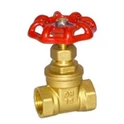
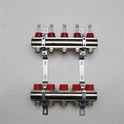
As a supplier of brass manifolds, ensuring the long - term reliability of our products is not only a commitment to our customers but also a cornerstone of our business. Brass manifolds are widely used in various industries, such as plumbing, HVAC, and industrial fluid control systems. Their reliability directly affects the performance and safety of the entire system. In this blog, I will share some key strategies on how to ensure the long - term reliability of brass manifolds.
1. High - Quality Raw Materials
The quality of raw materials is the foundation of reliable brass manifolds. We always source high - grade brass alloys that meet strict industry standards. High - quality brass has excellent corrosion resistance, mechanical strength, and thermal conductivity. For example, lead - free brass is becoming increasingly popular due to its environmental friendliness and compliance with health regulations. When selecting raw materials, we conduct comprehensive tests to ensure that they have the right chemical composition and physical properties. This includes checking the copper, zinc, and other alloying element content, as well as testing for hardness, density, and tensile strength.
2. Precision Manufacturing Processes
Precision manufacturing is crucial for the long - term reliability of brass manifolds. Our manufacturing processes are designed to achieve tight tolerances and high - quality finishes. We use advanced machining techniques, such as CNC (Computer Numerical Control) machining, which allows for highly accurate and repeatable production. CNC machining can create complex shapes and features with minimal errors, ensuring that the manifold components fit together perfectly.


In addition to machining, we also pay close attention to the surface treatment of brass manifolds. A proper surface treatment can enhance corrosion resistance and improve the overall appearance of the product. For example, electroplating or passivation can be applied to form a protective layer on the surface of the brass, preventing oxidation and corrosion.
3. Rigorous Quality Control
Quality control is an essential part of ensuring the long - term reliability of brass manifolds. We have a comprehensive quality control system in place that covers every stage of the production process, from raw material inspection to final product testing.
During the raw material inspection, we use various testing methods, such as chemical analysis and non - destructive testing, to ensure that the incoming materials meet our quality requirements. In the manufacturing process, we conduct in - process inspections at key points to detect and correct any potential quality issues early.
Before the products are shipped, we perform a series of final tests. These tests include pressure testing, leak testing, and functional testing. Pressure testing is used to ensure that the manifold can withstand the specified operating pressure without any leaks or failures. Leak testing is conducted using advanced equipment to detect even the smallest leaks. Functional testing verifies that the manifold operates as intended in real - world applications.
4. Design Optimization
A well - designed brass manifold is more likely to be reliable in the long term. Our design team takes into account various factors, such as fluid flow characteristics, pressure distribution, and stress concentration. By optimizing the design, we can reduce the risk of failure and improve the overall performance of the manifold.
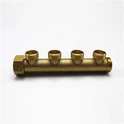
For example, when designing a Flowmeter Manifold, we consider the flow rate and flow pattern of the fluid to ensure accurate measurement. In the case of a Four Way Brass Manifold, we design the internal passages to minimize pressure drop and ensure uniform flow distribution.
5. Proper Installation and Maintenance Guidelines
Providing proper installation and maintenance guidelines to our customers is also important for the long - term reliability of brass manifolds. We offer detailed installation instructions that include information on proper mounting, connection, and sealing. Incorrect installation can lead to leaks, pressure losses, and premature failure of the manifold.
In addition, we provide maintenance recommendations, such as regular cleaning, inspection, and lubrication. Regular maintenance can help detect and address potential issues before they become major problems. For example, checking for signs of corrosion, wear, or loose connections can prevent system failures and extend the service life of the manifold.
6. Continuous Improvement
The pursuit of continuous improvement is a key factor in ensuring the long - term reliability of our brass manifolds. We constantly monitor customer feedback, industry trends, and technological advancements. Based on this information, we make improvements to our products, manufacturing processes, and quality control systems.
We also invest in research and development to explore new materials, manufacturing techniques, and design concepts. For example, we may investigate the use of new alloy compositions or advanced coating technologies to further enhance the performance and reliability of our brass manifolds.
7. Compatibility with Other System Components
Brass manifolds often work in conjunction with other components in a fluid control system, such as valves, pumps, and sensors. Ensuring compatibility between the manifold and these other components is crucial for the long - term reliability of the entire system.
We take into account the operating conditions, pressure ratings, and flow characteristics of the other components when designing and manufacturing our brass manifolds. For example, when supplying a Switch Valve Manifold, we ensure that it is compatible with the specific valves and control systems it will be used with. Incompatible components can lead to system malfunctions, reduced efficiency, and increased wear and tear on the manifold.
8. Training and Support
We offer training and support services to our customers to help them make the most of our brass manifolds. Our technical support team is available to answer any questions related to product selection, installation, maintenance, and troubleshooting.
We also provide training programs for our customers' technicians and engineers. These training programs can help improve their understanding of brass manifolds and how to ensure their proper operation. By empowering our customers with knowledge and skills, we can enhance the long - term reliability of our products in their applications.
In conclusion, ensuring the long - term reliability of brass manifolds requires a comprehensive approach that covers raw material selection, manufacturing processes, quality control, design optimization, installation and maintenance, continuous improvement, component compatibility, and customer support. As a supplier, we are committed to providing high - quality, reliable brass manifolds that meet the diverse needs of our customers.
If you are interested in our brass manifolds or have any questions about their reliability and performance, please feel free to contact us for procurement discussions. We look forward to working with you to meet your fluid control system requirements.
References
- ASME B31.3 Process Piping Code
- ASTM Standards for Brass Alloys
- ISO 9001 Quality Management System Standards