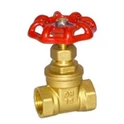
Brass has long been a popular material in various industrial applications due to its excellent properties. As a supplier of brass manifolds, I often get asked whether brass manifolds can be used in oil and gas pipelines. In this blog post, I'll explore this question in detail, looking at the properties of brass, the requirements of oil and gas pipelines, and the potential applications and limitations of brass manifolds in this context.
Properties of Brass
Brass is an alloy primarily composed of copper and zinc, with the addition of other elements in some cases to enhance specific properties. One of the key advantages of brass is its good corrosion resistance. Copper, a major component of brass, forms a protective oxide layer on its surface when exposed to air, which helps prevent further corrosion. This makes brass suitable for use in environments where moisture and some corrosive substances are present.
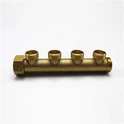
In addition to corrosion resistance, brass also has good mechanical properties. It is relatively strong and ductile, which means it can be easily formed into complex shapes, such as the intricate designs required for manifolds. Manifolds are used to distribute or collect fluids, and their design often involves multiple ports and passages. The malleability of brass allows for the production of high - quality manifolds with precise dimensions.
Another important property of brass is its good thermal conductivity. This can be beneficial in applications where heat transfer is involved. In oil and gas pipelines, temperature control can be crucial, and brass manifolds can help in dissipating or transferring heat as needed.
Requirements of Oil and Gas Pipelines
Oil and gas pipelines operate in harsh environments and have strict requirements. Firstly, the materials used in these pipelines must be able to withstand high pressures. The pressure in oil and gas pipelines can vary significantly depending on the location, the type of fluid being transported, and the distance of the pipeline. Manifolds in these pipelines need to be able to handle these high - pressure conditions without leaking or failing.
Secondly, corrosion resistance is of utmost importance. Oil and gas often contain various corrosive substances, such as sulfur compounds, acids, and salts. These substances can cause significant damage to the pipeline materials over time. Any corrosion in the pipeline or its components can lead to leaks, which not only result in loss of product but also pose safety hazards.
The materials must also be compatible with the fluids being transported. Different types of oil and gas have different chemical compositions, and the pipeline components need to be able to resist chemical reactions with these fluids. For example, some heavy oils may contain high levels of asphaltenes, which can adhere to the pipeline walls if the material is not compatible.


Potential Applications of Brass Manifolds in Oil and Gas Pipelines
Despite the harsh conditions in oil and gas pipelines, there are several potential applications for brass manifolds.
Switch Valve Manifold
A Switch Valve Manifold can be used to control the flow of oil or gas in different directions. In a complex pipeline network, there may be a need to divert the flow to different branches or to shut off the flow in certain sections for maintenance or safety reasons. Brass switch valve manifolds can be designed to handle these functions effectively. Their corrosion resistance and mechanical strength make them suitable for long - term use in these applications.
Temperature Control Manifold
In oil and gas pipelines, maintaining the right temperature is crucial. A Temperature Control Manifold can be used to regulate the temperature of the fluid. For example, in cold environments, the manifold can be used to mix heated fluids with the main flow to prevent the oil or gas from solidifying. The good thermal conductivity of brass allows for efficient heat transfer, making it an ideal material for temperature control manifolds.
Flowmeter Manifold
Flowmeters are used to measure the flow rate of oil and gas in pipelines. A Flowmeter Manifold is used to direct the fluid to the flowmeter and then back to the main pipeline. Brass manifolds can be precisely engineered to ensure accurate flow measurement. Their smooth internal surfaces reduce flow resistance, which is important for accurate flowmeter readings.
Limitations of Brass Manifolds in Oil and Gas Pipelines
While brass has many advantages, there are also some limitations when it comes to using brass manifolds in oil and gas pipelines.
One of the main limitations is the potential for stress corrosion cracking. In the presence of certain corrosive substances and high - stress conditions, brass can develop cracks over time. This is a significant concern in high - pressure oil and gas pipelines, as even a small crack can lead to a major failure.
Another limitation is the relatively lower strength compared to some other materials, such as stainless steel. In extremely high - pressure applications, brass manifolds may not be able to withstand the pressure as well as stronger materials.
Brass may also be affected by some aggressive chemicals present in certain types of oil and gas. For example, if the oil or gas contains high levels of ammonia or certain acids, brass may corrode more rapidly than in a less aggressive environment.
Mitigating the Limitations
To overcome the limitations of using brass manifolds in oil and gas pipelines, several measures can be taken.
For stress corrosion cracking, proper design and installation are crucial. Manifolds should be designed to minimize stress concentrations, and they should be installed in a way that avoids excessive stress on the components. Additionally, surface treatments can be applied to the brass manifolds to enhance their corrosion resistance.
To address the strength issue, the design of the brass manifolds can be optimized. For example, thicker walls can be used in high - pressure areas, or the manifold can be reinforced with additional support structures.
When dealing with aggressive chemicals, compatibility testing should be carried out before using brass manifolds. If necessary, alternative materials or protective coatings can be used to prevent corrosion.
Conclusion
In conclusion, brass manifolds can be used in oil and gas pipelines, but their use depends on the specific conditions of the pipeline. Their corrosion resistance, mechanical properties, and thermal conductivity make them suitable for many applications, such as switch valve manifolds, temperature control manifolds, and flowmeter manifolds. However, they also have limitations, such as stress corrosion cracking and lower strength compared to some other materials. By taking appropriate measures to mitigate these limitations, brass manifolds can provide a reliable and cost - effective solution for oil and gas pipeline systems.
If you are interested in our brass manifolds for your oil and gas pipeline projects, we invite you to contact us for a detailed discussion and to start the procurement process. Our team of experts can provide you with the best advice and solutions based on your specific requirements.
References
- "Materials for Oil and Gas Pipelines" - Industry Handbook on Pipeline Materials
- "Properties and Applications of Brass Alloys" - Metallurgical Research Journal
- "Corrosion in Oil and Gas Pipelines" - Journal of Petroleum Engineering and Corrosion Science