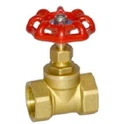
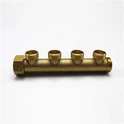
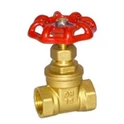
As a supplier of Brass Valve Spools, I've encountered numerous inquiries regarding the standard size of these essential components. Understanding the standard sizes of brass valve spools is crucial for both manufacturers and end - users, as it directly impacts the functionality and compatibility of the valve systems they are used in.
Understanding Brass Valve Spools
Brass valve spools play a pivotal role in many fluid control systems. They are responsible for controlling the flow of liquids or gases through a valve by sliding back and forth to open or close ports. The material, brass, is widely chosen due to its excellent corrosion resistance, good mechanical properties, and ease of machining.
Industry Standards and Factors Influencing Size
1. Application - Specific Requirements
The size of a brass valve spool is mainly determined by the application it is intended for. In industrial hydraulic systems, for example, larger valve spools might be required to handle high - volume fluid flows and high pressures. On the other hand, in household plumbing fixtures, smaller and more compact valve spools are sufficient as they deal with lower flow rates and pressures.
2. ISO and Other Standards
The International Organization for Standardization (ISO) has set certain standards for valve components, including brass valve spools. These standards cover aspects such as dimensional accuracy, surface finish, and material properties. In addition to ISO, there are also regional and national standards that manufacturers need to adhere to. For instance, in the United States, the American National Standards Institute (ANSI) has specific guidelines regarding valve sizing and performance.
3. Compatibility with Valve Bodies
The size of a brass valve spool must be precisely matched to the valve body it will be installed in. A mismatch in size can lead to issues such as leakage, improper sealing, and inefficient flow control. This means that when designing or supplying brass valve spools, we need to take into account the inner diameter, length, and other critical dimensions of the corresponding valve bodies.


Common Standard Sizes
1. Diameter
The diameter of brass valve spools can vary significantly. Common diameters range from as small as 6mm for some miniature valves used in precision instrumentation to over 50mm for large - scale industrial valves. For medium - sized industrial valves used in general manufacturing processes, diameters around 15mm - 25mm are quite common.
2. Length
The length of a brass valve spool is also an important parameter. It is determined by the number of ports the valve needs to control and the stroke required for proper operation. Shorter valve spools may have a length of around 20mm - 30mm, while longer ones used in complex multi - port valves can be up to 100mm or more.
3. Tolerance
Dimensional tolerance is a critical factor when it comes to brass valve spools. Tight tolerances are necessary to ensure proper fit and function. In most cases, the tolerance for diameter might be in the range of ±0.01mm - ±0.05mm, and for length, it could be ±0.1mm - ±0.5mm, depending on the application requirements and the manufacturing process capabilities.
Our Offerings
At our company, we understand the diverse needs of our customers when it comes to brass valve spools. We offer a wide range of standard sizes in [diameter range] and [length range] to meet various industrial and household applications. Our products are carefully manufactured under strict quality control procedures to ensure they meet or exceed the relevant industry standards.
1. Pickled Brass Spool
We have a special Pickled Brass Spool option. The pickling process gives the spool a smooth surface finish and enhanced corrosion resistance, making it suitable for applications where the valve will be exposed to harsh environments. This type of spool is often used in chemical processing plants and marine applications.
2. High - Quality Brass Spool
Our High - Quality Brass Spool is crafted from premium - grade brass materials. It is precision - machined to have tight tolerances and excellent surface quality. These spools are ideal for high - performance valve systems where reliability and accuracy are of utmost importance, such as in aerospace and high - end automotive applications.
The Importance of Working with a Reliable Supplier
When purchasing brass valve spools, it is essential to work with a reliable supplier. A good supplier can offer not only high - quality products but also technical support and after - sales service. At our company, we have a team of experienced engineers who can assist customers in selecting the right size and type of brass valve spools for their specific applications. We also provide custom - manufacturing services for customers with unique requirements.
Conclusion
In conclusion, the standard size of a brass valve spool is influenced by a variety of factors, including application requirements, industry standards, and compatibility with valve bodies. Common standard sizes vary in diameter and length, and tight tolerances are crucial for proper function. As a supplier, we are committed to providing a wide range of high - quality brass valve spools to meet the diverse needs of our customers.
If you are in the market for brass valve spools and are looking for a reliable partner, we'd be more than happy to discuss your requirements. Whether you need standard sizes or custom - made spools, we have the expertise and resources to fulfill your needs. Contact us today to start a conversation about your brass valve spool procurement.
References
- ISO standards related to valve components
- ANSI guidelines on valve sizing and performance
- Technical literature on fluid control systems and valve design