Yo, what's up! As a manifold supplier, I've been knee - deep in the world of manifolds for ages. And let me tell you, manifolds are like the unsung heroes of geometry. They might not be as flashy as some other geometric concepts, but their significance is huge.
First off, let's break down what a manifold is. In simple terms, a manifold is a geometric object that locally resembles Euclidean space. Think of it like a big, wacky shape that, if you zoom in really close on any small part of it, looks like a normal, flat plane. It's like those maps of the world that are flat, even though the Earth is a sphere. On a small scale, the flat map does a pretty good job of representing a small area of the Earth's surface.
In geometry, manifolds are used to describe all sorts of things. One of the most important applications is in differential geometry. Differential geometry is all about studying curves and surfaces using calculus. Manifolds are the perfect objects to study in this context because they have a smooth structure. This smoothness allows us to use calculus techniques to analyze them. For example, we can calculate things like curvature, which tells us how much a manifold bends or twists at a given point.
Curvature is a super important concept in geometry. It helps us understand the shape of a manifold. If a manifold has zero curvature, it's flat, just like a piece of paper. But if it has non - zero curvature, it can be all sorts of crazy shapes. For instance, a sphere has positive curvature everywhere. This means that if you try to lay a piece of paper on a sphere, it'll always wrinkle up because the paper is flat and the sphere is curved.
Manifolds also play a crucial role in topology. Topology is the study of properties that are preserved under continuous deformations, like stretching and bending, but not tearing. In topology, two manifolds are considered the same if you can deform one into the other without cutting or gluing. For example, a doughnut (a torus) and a coffee cup are topologically equivalent because you can imagine deforming one into the other. This might sound weird, but it's a fundamental idea in topology, and manifolds are the main objects we study in this field.
Another area where manifolds are significant is in physics, especially in general relativity. Einstein's theory of general relativity describes gravity as the curvature of spacetime. And guess what? Spacetime is modeled as a four - dimensional manifold. The mass and energy in the universe cause this manifold to curve, and this curvature is what we experience as gravity. So, without the concept of manifolds, we wouldn't be able to understand the fundamental nature of the universe in the way we do today.
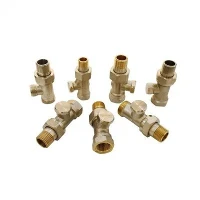
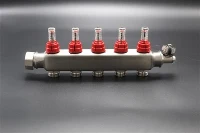
Now, let's talk about some practical applications. As a manifold supplier, I know that manifolds are used in all sorts of industries. In the automotive industry, manifolds are used in engines to distribute air and fuel to the cylinders. They're also used in plumbing systems to distribute water or gas. In these cases, the shape and design of the manifold are crucial for efficient operation.
One type of product that's related to manifolds is the Copper Wiring Terminal. These terminals are used to connect wires in electrical systems, and they're often part of a larger manifold - based setup. If you're interested in learning more about Copper Wiring Terminal, you can check out this link: Copper Wiring Terminal.
In engineering, manifolds are used to optimize fluid flow. For example, in a hydraulic system, a well - designed manifold can reduce pressure drops and improve the overall efficiency of the system. This is because manifolds can be designed to control the direction and speed of the fluid flow.
When it comes to manufacturing, manifolds are often machined or cast. The manufacturing process needs to be precise to ensure that the manifold has the right shape and dimensions. Any small error in the manufacturing can lead to problems in the performance of the system where the manifold is used.
In the field of robotics, manifolds are used to describe the configuration space of a robot. The configuration space is the set of all possible positions and orientations of the robot's parts. By representing this space as a manifold, engineers can use geometric and topological techniques to plan the robot's motion.
Now, if you're in the market for manifolds, whether it's for a small DIY project or a large - scale industrial application, we've got you covered. We offer a wide range of manifolds in different materials, sizes, and shapes. Our team of experts can also help you choose the right manifold for your specific needs.
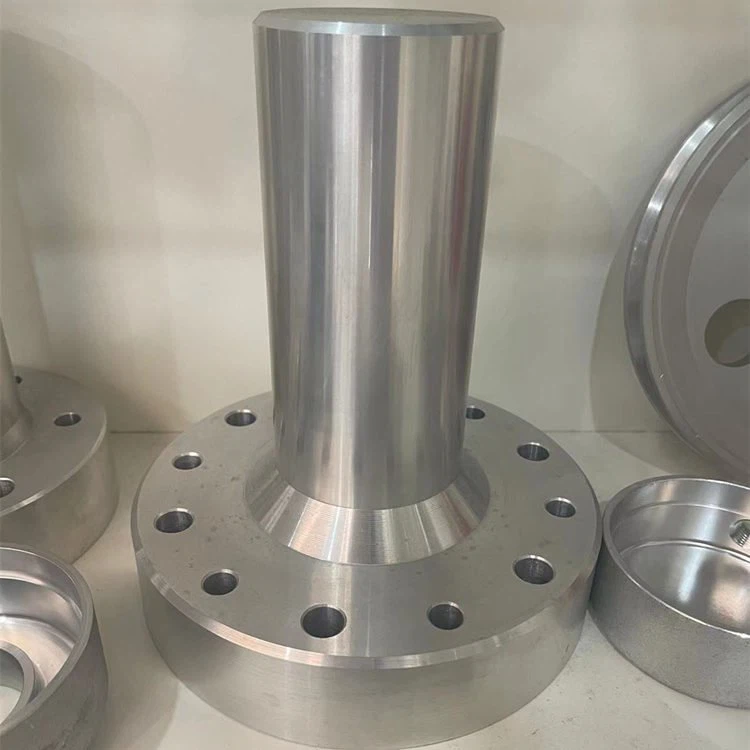
If you're interested in discussing your manifold requirements, don't hesitate to reach out. We're always happy to have a chat and see how we can help you with your project. Whether you're an engineer, a hobbyist, or someone from an industry, we've got the knowledge and the products to meet your manifold needs.
In conclusion, manifolds are incredibly significant in geometry. They're the foundation for many important concepts in differential geometry, topology, and physics. And in the real world, they're used in countless applications, from automotive engines to robotics. So, the next time you come across a manifold, you'll know just how important it is.
References
- Do Carmo, M. P. (1992). Differential Geometry of Curves and Surfaces. Prentice - Hall.
- Nakahara, M. (2003). Geometry, Topology and Physics. Institute of Physics Publishing.
- Schutz, B. F. (2009). A First Course in General Relativity. Cambridge University Press.