Hey there! I'm a supplier of Duplex Valves, and today I'm super stoked to break down how these nifty gadgets work. Duplex valves are pretty crucial in a bunch of different industries, and understanding their operation can really up your game, whether you're in the market to buy one or just a curious soul.
Let's start with the basics. A duplex valve is a type of valve that combines two separate valves into one unit. This setup offers some sweet advantages, like saving space and reducing the number of connections in a system. It's like having a two - in - one deal, which is always a plus, right?
The Structure of a Duplex Valve
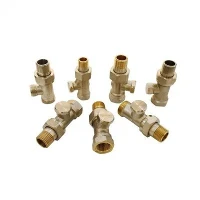
Before we dive into how it works, let's take a quick look at its structure. A typical duplex valve consists of two valve bodies that are usually connected side by side. Each valve body has its own inlet and outlet ports. There's also a common connection point that allows for the flow of fluid between the two valves.
The valve bodies are often made of high - quality materials like brass, stainless steel, or other alloys, depending on the application. Brass is a popular choice because it's corrosion - resistant, easy to machine, and has good thermal conductivity. This makes it suitable for a wide range of environments, especially in heating systems.
How the Flow is Controlled
Now, let's get to the juicy part: how the duplex valve controls the flow of fluid. The operation of a duplex valve is based on the principle of opening and closing the two valves independently or in combination.
When the system is in normal operation, one valve can be open while the other is closed. For example, in a heating system, if you want to regulate the flow of hot water to a radiator, you can use the duplex valve to direct the water through one of the valve bodies. The open valve allows the water to flow from the inlet port to the outlet port and into the radiator.
Let's say you're using a Manual Radiator Valve in conjunction with the duplex valve. You can adjust the manual valve to control the amount of water flowing through the open valve body of the duplex valve. This way, you can fine - tune the temperature of the radiator.
If you need to increase the flow, you can either fully open the existing open valve or open the second valve in the duplex unit. This gives you more flexibility in managing the flow rate and pressure within the system.
Switching between Valves
One of the coolest features of a duplex valve is the ability to switch between the two valves. This is really handy in situations where one valve needs maintenance or if there's a blockage in one of the valve bodies.
To switch from one valve to the other, you simply close the open valve and open the previously closed valve. This can be done manually or, in more advanced systems, automatically using actuators. Actuators are devices that can open and close the valves based on signals from a control system.
For instance, in an industrial process where continuous flow is critical, if one valve starts to malfunction, the control system can quickly switch to the other valve to ensure that the process keeps running smoothly. This reduces downtime and prevents costly disruptions.
Pressure and Flow Regulation
Duplex valves also play a key role in regulating pressure and flow within a system. The two valves can be adjusted to balance the pressure on both sides of the valve unit. When the pressure in one part of the system is too high, the duplex valve can be adjusted to redirect the flow and equalize the pressure.
Let's take a look at a scenario in a water supply system. If there's a sudden increase in pressure due to a pump malfunction, the duplex valve can be used to divert some of the flow to a bypass line or another part of the system. This helps to prevent damage to the pipes and other components in the system.
In terms of flow regulation, the duplex valve can be set to maintain a constant flow rate. By adjusting the opening and closing of the two valves, you can ensure that the right amount of fluid is delivered to the desired location at all times.
Applications of Duplex Valves
Duplex valves are used in a wide variety of applications. In the heating and cooling industry, they're commonly used in radiator systems to control the flow of hot or cold water. They're also used in industrial processes, such as chemical manufacturing, where precise control of fluid flow is essential.
In the oil and gas industry, duplex valves are used in pipelines to regulate the flow of oil and gas. They can handle high pressures and temperatures, making them suitable for these demanding environments.
Why Choose Our Duplex Valves
As a supplier of Duplex Valves, I can tell you that our products are top - notch. We use only the best materials and the latest manufacturing techniques to ensure that our duplex valves are reliable and long - lasting.
Our valves are designed to be easy to install and maintain. Whether you're a DIY enthusiast or a professional plumber, you'll find that our duplex valves are user - friendly. We also offer a wide range of sizes and configurations to meet the specific needs of different applications.
Contact Us for Purchasing
If you're interested in purchasing a duplex valve for your project, don't hesitate to get in touch. We're here to answer any questions you might have and help you find the perfect valve for your needs. Whether you're looking for a valve for a small residential heating system or a large industrial process, we've got you covered.
Drop us a line, and let's start a conversation about how our duplex valves can improve your system. You won't be disappointed with the quality and performance of our products.


References
- Handbook of Valves and Actuators
- Industrial Valve Technology: A Practical Guide
So, that's a wrap on how a duplex valve works. I hope this blog has been helpful in giving you a better understanding of these amazing valves. If you have any more questions, feel free to reach out!