Hey there! I'm a supplier of Ball Union Valves, and I've been in the valve business for quite a while. One question that often pops up in my chats with customers is: "What is the influence of valve design on the flow pattern of Ball Union Valves?" Well, let's dive right into it.
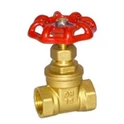
First off, we need to understand what Ball Union Valves are. They're these nifty devices used in a whole bunch of industries to control the flow of fluids. They've got a ball inside with a hole through it, and when you turn the ball, you can open or close the valve, allowing or stopping the flow.
The design of a Ball Union Valve can have a huge impact on the flow pattern. Take the size of the ball for example. If the ball has a larger hole (also known as the port), it allows more fluid to pass through at once. This means a higher flow rate. On the flip side, a smaller port restricts the flow, reducing the amount of fluid that can get through in a given time. Imagine it like a water hose; a wider hose can let out more water faster than a skinny one.
The shape of the valve body also matters. A well - designed valve body will have a smooth interior surface. This smoothness reduces friction as the fluid moves through the valve. When there's less friction, the flow is more laminar, which means the fluid moves in neat layers. It's like cars on a well - paved highway, all moving smoothly in their lanes. In contrast, a rough - surfaced valve body can cause the fluid to become turbulent. Turbulent flow can increase energy losses and put more stress on the valve components over time.
Another design aspect is the seating of the ball. The seat is the part where the ball makes contact when the valve is closed. A good seat design ensures a tight seal when the valve is shut off. But when the valve is open, it can also affect the flow pattern. If the seat is designed to gradually expand or contract the flow path as the ball rotates, it can help in achieving a more stable and predictable flow. For instance, a tapered seat design can guide the fluid smoothly as it enters or exits the valve.
Let's talk about the handles and actuators too. The way you operate the valve can influence the flow. Manual handles give you direct control, but it might be a bit harder to achieve a precise and consistent flow rate. Automatic actuators, on the other hand, can be programmed to open and close the valve at specific rates, which can result in a more controlled flow pattern. This is especially important in applications where precise flow control is crucial, like in chemical processing plants.
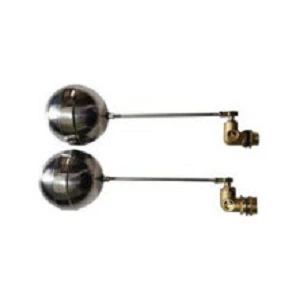
Now, let me introduce you to some of our amazing products. Check out our Brass Ball Float Valve. This valve is great for applications where you need to control the liquid level in a tank. The float mechanism works in tandem with the ball valve design to ensure that the flow stops when the tank is full and starts again when the level drops.
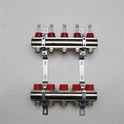
Our Multi - Function Filter Ball Valve is another gem. It combines the function of a filter and a ball valve. The filter part removes impurities from the fluid before it passes through the valve, which not only protects the valve but also helps in maintaining a cleaner and more efficient flow.
And if you're looking for a compact option, our Ball Valve with Cap 1/2" is a perfect choice. Despite its small size, it's got all the advantages of a well - designed Ball Union Valve. The cap provides an extra layer of protection and can be useful in certain applications where you might need to seal off the valve temporarily.
The orientation of the valve installation can also affect the flow pattern. A horizontally installed valve might have a different flow behavior compared to a vertically installed one. In a horizontal valve, the fluid might be more prone to settling and causing sediment buildup, which can disrupt the flow. In a vertical valve, gravity can play a role in helping the fluid move more smoothly, especially if the valve is installed in the right direction.
The material of the valve components also has an impact. Some materials, like stainless steel, are smooth and corrosion - resistant. This means that the internal surface of the valve stays in good condition for a long time, maintaining a consistent flow pattern. Other materials might corrode or wear out over time, which can lead to changes in the flow characteristics.

In industries where the fluid being transported is viscous, like in the oil and gas sector, the valve design becomes even more critical. A valve with a large port and a smooth interior can help in reducing the pressure drop and ensuring that the viscous fluid can flow through the system without too much resistance.
When it comes to cost - effectiveness, a well - designed Ball Union Valve can save a lot of money in the long run. A valve that provides a stable and efficient flow pattern means less energy consumption, as less power is needed to push the fluid through the system. It also reduces the wear and tear on the valve and other components of the pipeline, which means fewer maintenance and replacement costs.
If you're in the market for high - quality Ball Union Valves and want to discuss how the design can benefit your specific application, don't hesitate to reach out. We're here to help you choose the perfect valve that will meet your flow requirements and save you money in the process. Whether you're dealing with water, gas, or some other kind of fluid, we've got the expertise to guide you.
References:
- American Society of Mechanical Engineers (ASME) standards on valve design
- Technical manuals of leading valve manufacturers