What is the flow rate capacity of Ball Union Valves?
As a trusted supplier of Ball Union Valves, I've been deeply involved in the industry, witnessing the crucial role these valves play in various fluid - handling systems. Understanding the flow rate capacity of Ball Union Valves is essential for engineers, technicians, and anyone involved in fluid control projects. In this blog, I'll delve into the factors that influence the flow rate capacity of Ball Union Valves and provide some practical insights.
1. Basics of Ball Union Valves
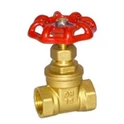
Ball Union Valves are a type of valve commonly used in plumbing, industrial piping, and other fluid - handling applications. They are known for their durability, reliability, and ease of installation and maintenance. The design of a Ball Union Valve consists of a ball with a hole in the center that can be rotated to control the flow of fluid. When the hole in the ball aligns with the pipe, fluid can flow freely; when the ball is rotated 90 degrees, the flow is blocked.
The Ball Union Valves we supply are made from high - quality materials, such as brass, which offers excellent corrosion resistance and mechanical strength. This ensures that the valves can withstand a wide range of operating conditions, including high pressures and temperatures.
2. Factors Affecting Flow Rate Capacity
2.1 Valve Size
One of the most significant factors affecting the flow rate capacity of a Ball Union Valve is its size. Larger valves generally have a higher flow rate capacity because they have a larger internal diameter, allowing more fluid to pass through. For example, a 2 - inch Ball Union Valve will typically have a much higher flow rate than a 1 - inch valve. When selecting a valve, it's important to choose the appropriate size based on the required flow rate of the system.
2.2 Ball Port Size
The size of the port in the ball also plays a crucial role in determining the flow rate capacity. There are two main types of ball ports: full port and standard port. A full - port ball valve has a port size that is the same as the internal diameter of the pipe, providing minimal flow restriction. In contrast, a standard - port ball valve has a smaller port size, which can cause some flow restriction. If high flow rates are required, a full - port Ball Union Valve is usually the better choice.
2.3 Fluid Viscosity
The viscosity of the fluid being handled is another important factor. Viscous fluids, such as oil or syrup, flow more slowly than less viscous fluids, like water. When dealing with viscous fluids, the flow rate capacity of a Ball Union Valve will be lower compared to when handling less viscous fluids. This is because the resistance to flow is higher for viscous fluids, and the valve needs to overcome this resistance.
2.4 Pressure Drop
Pressure drop across the valve is also related to the flow rate capacity. As fluid flows through a valve, there is a decrease in pressure. A higher flow rate generally results in a larger pressure drop. If the pressure drop is too large, it can affect the performance of the entire fluid - handling system. Therefore, it's necessary to consider the allowable pressure drop when determining the appropriate flow rate for a Ball Union Valve.

3. Calculating Flow Rate Capacity
Calculating the flow rate capacity of a Ball Union Valve can be a complex process, as it involves multiple factors. However, there are some standard methods and equations that can be used. One common approach is to use the valve's flow coefficient, also known as Cv.
The flow coefficient (Cv) is a measure of the valve's ability to pass fluid. It is defined as the number of US gallons per minute of water at 60°F that will flow through the valve with a pressure drop of 1 psi. The higher the Cv value, the greater the flow rate capacity of the valve.
The formula for calculating the flow rate (Q) using the Cv value is:
[Q = C_{v}\sqrt{\frac{\Delta P}{SG}}]
where (Q) is the flow rate in gallons per minute (GPM), (C_{v}) is the flow coefficient of the valve, (\Delta P) is the pressure drop across the valve in psi, and (SG) is the specific gravity of the fluid.
For example, if a Ball Union Valve has a (C_{v}) value of 10 and the pressure drop across the valve is 5 psi, and the fluid is water (SG = 1), the flow rate can be calculated as:
[Q = 10\sqrt{\frac{5}{1}}\approx 22.4\ GPM]
4. Applications and Flow Rate Requirements
Different applications have different flow rate requirements. In residential plumbing systems, for example, the flow rate requirements are relatively low. A typical household faucet might require a flow rate of 2 - 5 GPM. In this case, a small - sized Ball Union Valve with a standard port might be sufficient.
On the other hand, in industrial applications such as chemical processing plants or water treatment facilities, the flow rate requirements can be much higher. These applications may require large - sized, full - port Ball Union Valves to ensure efficient fluid flow. For instance, in a large - scale water treatment plant, a valve might need to handle flow rates of hundreds or even thousands of GPM.
5. Our Product Range and Flow Rate Capacities
We offer a wide range of Ball Union Valves with different sizes and port types to meet the diverse needs of our customers. Our Filter Ball Valve is designed to not only control the flow but also filter out impurities in the fluid. This valve is available in various sizes, and its flow rate capacity can be adjusted according to the specific requirements of the application.
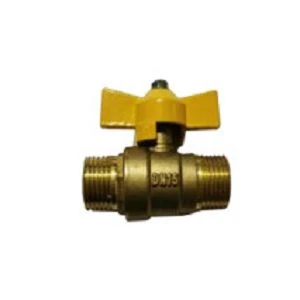
Our Butterfly Handle Ball Valve 1" is a popular choice for many applications. It provides a good balance between flow rate capacity and ease of operation. The 1 - inch size is suitable for applications with moderate flow rate requirements, such as small - scale industrial processes or some commercial plumbing systems.
6. Conclusion and Call to Action
Understanding the flow rate capacity of Ball Union Valves is essential for ensuring the proper functioning of fluid - handling systems. By considering factors such as valve size, ball port size, fluid viscosity, and pressure drop, you can select the right valve for your specific application.
As a leading supplier of Ball Union Valves, we are committed to providing high - quality products and excellent customer service. If you have any questions about the flow rate capacity of our valves or need assistance in selecting the right valve for your project, please feel free to contact us. We are here to help you make the best decision for your fluid - control needs.
References
- Crane Co., "Flow of Fluids Through Valves, Fittings, and Pipe", Technical Paper No. 410.
- Spirax Sarco, "Steam Engineering Tutorials", available in printed form.