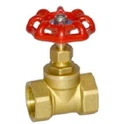
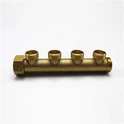
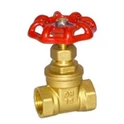
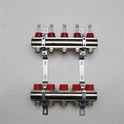
Hey there! As a supplier of Flowmeter Manifolds, I often get asked about the flow capacity of these nifty devices. So, let's dive right in and explore what flow capacity means in the context of a flowmeter manifold.
First off, what's a flowmeter manifold? Well, it's a crucial component in many fluid - handling systems. A Flowmeter Manifold is designed to distribute or combine fluid flows, and it usually comes with multiple ports for connecting various instruments like flowmeters, pressure gauges, and valves.
Flow capacity is all about how much fluid a flowmeter manifold can handle. It's typically measured in units like gallons per minute (GPM) or liters per second (L/s). But determining the exact flow capacity isn't as simple as it might seem at first glance. There are several factors that come into play.
Pipe Size
The size of the pipes connected to the manifold has a huge impact on flow capacity. Larger pipes generally allow more fluid to pass through. Think of it like a highway. A four - lane highway can handle more cars (or in our case, fluid) than a single - lane road. If you have a manifold with small - diameter pipes, the flow will be restricted, and the overall capacity will be lower.
Pressure Drop
Pressure drop is another key factor. As fluid flows through the manifold, it encounters resistance. This resistance causes a drop in pressure. If the pressure drop is too high, it can limit the flow rate. For example, if you're trying to push water through a long, narrow pipe, you'll need more pressure to keep the water flowing at a decent rate. In a manifold, factors like the length of the internal passages, the number of bends, and the surface roughness can all contribute to pressure drop.
Viscosity of the Fluid
The viscosity of the fluid being measured also affects flow capacity. Viscosity is a measure of a fluid's resistance to flow. Honey, for instance, is more viscous than water. So, if you're using a flowmeter manifold to measure the flow of honey, it'll be more difficult to push the honey through the manifold compared to water. This means that the flow capacity for a viscous fluid will be lower than for a less viscous one.
Type of Manifold Design
Different manifold designs have different flow capacities. Some manifolds are designed for high - flow applications, while others are more suited for low - flow situations. For example, a Temperature Control Manifold might have a different internal structure compared to a standard flowmeter manifold. This is because its main function is to regulate temperature, and it might not need to handle extremely high flow rates. On the other hand, a Switch Valve Manifold might be designed to quickly switch between different flow paths, which could also affect its flow capacity.
Calculating Flow Capacity
Calculating the flow capacity of a flowmeter manifold isn't always straightforward. There are some standard equations and formulas that engineers use, but they often require detailed information about the manifold's design, the fluid properties, and the operating conditions.
One common approach is to use the Bernoulli's equation, which relates the pressure, velocity, and elevation of a fluid. However, this equation assumes ideal conditions, and in real - world applications, there are many other factors to consider.


Another method is to use empirical data. Manufacturers often conduct tests on their manifolds to determine the flow capacity under different conditions. They'll measure the flow rate at various pressures and with different fluids and then provide this information in their product specifications.
Importance of Knowing Flow Capacity
Knowing the flow capacity of a flowmeter manifold is crucial for several reasons. First of all, it helps in proper system design. If you're building a fluid - handling system, you need to make sure that the manifold can handle the expected flow rate. Otherwise, you might run into problems like low - flow situations or excessive pressure drop, which can affect the performance of your entire system.
Secondly, it's important for maintenance and troubleshooting. If you notice a decrease in flow rate, knowing the expected flow capacity can help you determine if there's a problem with the manifold or other components in the system.
How We Ensure Optimal Flow Capacity
As a supplier of flowmeter manifolds, we take several steps to ensure that our products have optimal flow capacity. We use high - quality materials to reduce internal resistance and pressure drop. Our engineers carefully design the internal passages to minimize bends and ensure smooth flow.
We also conduct extensive testing on our manifolds. We test them with different fluids and at various pressures to make sure they perform as expected. This way, we can provide our customers with accurate flow capacity data and ensure that our manifolds meet their specific needs.
Conclusion
In conclusion, the flow capacity of a flowmeter manifold is determined by a variety of factors, including pipe size, pressure drop, fluid viscosity, and manifold design. Understanding these factors is essential for proper system design, maintenance, and troubleshooting.
If you're in the market for a flowmeter manifold and need to know more about flow capacity or other specifications, don't hesitate to reach out. We're here to help you find the right manifold for your application. Whether you need a high - flow manifold for an industrial process or a low - flow one for a laboratory setup, we've got you covered. Contact us today to start the procurement process and let's discuss how our Flowmeter Manifolds can meet your requirements.
References
- Fluid Mechanics textbooks
- Manufacturer's product specifications
- Industry research papers on flow measurement and manifold design