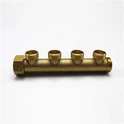
Studying SS (Stainless Steel) Manifolds presents a unique set of challenges that researchers, engineers, and students alike must navigate. As a supplier of SS Manifolds, I have witnessed firsthand the complexities involved in understanding and working with these crucial components. In this blog post, I will delve into the various challenges faced when studying SS Manifolds and provide insights based on my experience in the industry.
Material Properties and Behavior
One of the primary challenges in studying SS Manifolds lies in understanding the material properties and behavior of stainless steel. Stainless steel is a versatile material known for its corrosion resistance, strength, and durability. However, its properties can vary significantly depending on factors such as the alloy composition, heat treatment, and manufacturing process.
For instance, different grades of stainless steel, such as 304 and 316, have distinct chemical compositions that affect their corrosion resistance and mechanical properties. 304 Stainless Steel Manifold is commonly used in general applications due to its good corrosion resistance and affordability. On the other hand, 316 stainless steel contains molybdenum, which enhances its resistance to pitting and crevice corrosion, making it suitable for more demanding environments.
Studying the behavior of stainless steel under different operating conditions, such as high temperatures, pressures, and corrosive media, is also essential. Stainless steel can undergo various forms of degradation, including stress corrosion cracking, intergranular corrosion, and pitting corrosion. Understanding these degradation mechanisms and developing strategies to mitigate them is crucial for ensuring the long-term performance and reliability of SS Manifolds.
Design and Manufacturing Complexity
Designing and manufacturing SS Manifolds is a complex process that requires a deep understanding of fluid dynamics, mechanical engineering, and materials science. SS Manifolds are typically custom-designed to meet the specific requirements of a particular application, such as flow rate, pressure, temperature, and chemical compatibility.
The design of SS Manifolds involves optimizing the geometry, dimensions, and layout of the manifold to ensure efficient fluid distribution and minimize pressure drop. This requires the use of advanced computational fluid dynamics (CFD) simulations to model the flow behavior inside the manifold and evaluate different design options.
Manufacturing SS Manifolds also presents several challenges. Stainless steel is a difficult material to machine due to its high strength and hardness. Specialized machining techniques, such as CNC machining, grinding, and welding, are often required to produce SS Manifolds with high precision and quality. Additionally, the manufacturing process must comply with strict quality control standards to ensure that the final product meets the required specifications.
Flow Distribution and Pressure Drop
Achieving uniform flow distribution and minimizing pressure drop are critical challenges in the design and operation of SS Manifolds. In many applications, such as chemical processing, water treatment, and HVAC systems, SS Manifolds are used to distribute fluids evenly to multiple outlets. However, due to the complex flow behavior inside the manifold, achieving uniform flow distribution can be difficult.
Factors such as the geometry of the manifold, the number and size of the outlets, and the flow rate and viscosity of the fluid can all affect the flow distribution. Non-uniform flow distribution can lead to uneven performance, reduced efficiency, and increased wear and tear on the manifold and its components.
Minimizing pressure drop is also important to ensure that the fluid can flow through the manifold with minimal resistance. Pressure drop can occur due to various factors, such as friction, turbulence, and changes in the cross-sectional area of the manifold. Excessive pressure drop can result in reduced flow rate, increased energy consumption, and decreased system performance.
To address these challenges, designers and engineers must carefully consider the flow behavior inside the manifold and use appropriate design techniques, such as the use of flow meters and flow control valves, to ensure uniform flow distribution and minimize pressure drop. Stainless Steel Manifold With Flow Meter can provide real-time information about the flow rate and help optimize the flow distribution inside the manifold.
Temperature and Thermal Management
SS Manifolds are often used in applications where they are exposed to high temperatures, such as in industrial processes, power generation, and automotive systems. Managing the temperature and thermal expansion of SS Manifolds is crucial to ensure their structural integrity and performance.
Stainless steel has a relatively high coefficient of thermal expansion, which means that it expands and contracts significantly with changes in temperature. If not properly managed, thermal expansion can cause stress and deformation in the manifold, leading to leaks, cracks, and other failures.
To address these challenges, designers and engineers must consider the thermal properties of stainless steel and use appropriate design techniques, such as the use of expansion joints and thermal insulation, to manage the temperature and thermal expansion of SS Manifolds. Stainless Steel Manifold With Temperature Control Valve Core can help regulate the temperature of the fluid flowing through the manifold and prevent overheating.
Corrosion and Chemical Compatibility
Corrosion is one of the most significant challenges in the use of SS Manifolds, especially in applications where they are exposed to corrosive media, such as acids, alkalis, and salts. Stainless steel is generally resistant to corrosion, but its resistance can be affected by factors such as the alloy composition, surface finish, and operating conditions.
To ensure the long-term performance and reliability of SS Manifolds, it is essential to select the appropriate grade of stainless steel based on the specific application requirements and the chemical compatibility of the fluid. Additionally, proper surface treatment and coating can be applied to enhance the corrosion resistance of SS Manifolds.
Maintenance and Inspection
Regular maintenance and inspection are essential to ensure the continued performance and reliability of SS Manifolds. Over time, SS Manifolds can accumulate dirt, debris, and other contaminants, which can affect their flow performance and cause corrosion. Additionally, the seals, gaskets, and other components of the manifold may wear out or fail, leading to leaks and other problems.


To address these challenges, it is important to establish a regular maintenance schedule and perform routine inspections of SS Manifolds. This may include cleaning the manifold, checking the seals and gaskets, and inspecting the manifold for signs of corrosion or damage. Any issues identified during the inspection should be addressed promptly to prevent further damage and ensure the safe and efficient operation of the manifold.
Conclusion
Studying SS Manifolds presents a wide range of challenges, from understanding the material properties and behavior of stainless steel to designing and manufacturing complex manifolds that meet the specific requirements of a particular application. As a supplier of SS Manifolds, I am committed to helping my customers overcome these challenges by providing high-quality products, technical support, and expertise.
If you are interested in learning more about SS Manifolds or have any questions about our products, please do not hesitate to contact us. We would be happy to discuss your specific requirements and provide you with a customized solution that meets your needs.
References
- ASM Handbook, Volume 13A: Corrosion: Fundamentals, Testing, and Protection, ASM International.
- Fluid Mechanics, by Frank M. White, McGraw-Hill Education.
- Stainless Steel: A Practical Guide, by Joseph R. Davis, ASM International.