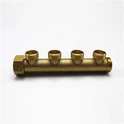
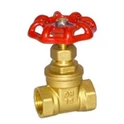
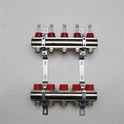
Brass manifolds are essential components in various industries, known for their versatility and reliability. As a supplier of brass manifolds, I've witnessed firsthand the remarkable bending and shaping capabilities that make these products so valuable. In this blog, I'll delve into the details of what these capabilities are, how they benefit different applications, and why brass is an ideal material for such processes.
The Nature of Brass and Its Suitability for Bending and Shaping
Brass is an alloy primarily composed of copper and zinc, with the proportions of these elements varying to achieve different properties. This alloy offers a unique combination of strength, ductility, and corrosion resistance, making it an excellent choice for manufacturing manifolds. The ductility of brass allows it to be bent and shaped without cracking or breaking, which is crucial for creating complex manifold designs.
One of the key factors contributing to brass's bending and shaping capabilities is its relatively low melting point compared to other metals. This characteristic makes it easier to work with during processes such as hot forging and casting. Additionally, brass has good thermal conductivity, which helps in maintaining a consistent temperature during these operations, reducing the risk of defects.
Bending Capabilities of Brass Manifolds
Cold Bending
Cold bending is a common method used to shape brass manifolds. It involves bending the brass at room temperature without the need for heating. This process is suitable for creating simple bends and curves in the manifold. Cold bending is often preferred when precision is required, as it allows for better control over the bending angle and radius.
The ductility of brass enables it to withstand significant deformation during cold bending. However, it's important to note that excessive bending can cause work hardening, which may reduce the material's ductility and increase the risk of cracking. To mitigate this, the brass may need to be annealed periodically during the bending process to restore its ductility.
Hot Bending
Hot bending is another option for shaping brass manifolds, especially when more complex bends or larger radii are required. This process involves heating the brass to a specific temperature range, typically between 500°C and 700°C, depending on the alloy composition. Heating the brass reduces its strength and increases its ductility, making it easier to bend.
Hot bending offers several advantages over cold bending. It allows for greater flexibility in terms of the bending angle and radius, and it can also reduce the risk of cracking and work hardening. However, hot bending requires specialized equipment and careful temperature control to ensure consistent results.
Shaping Capabilities of Brass Manifolds
Casting
Casting is a widely used method for manufacturing brass manifolds. It involves pouring molten brass into a mold and allowing it to solidify. This process can be used to create complex shapes and geometries that would be difficult or impossible to achieve through other methods.
Casting offers several benefits for brass manifolds. It allows for the production of parts with high precision and accuracy, and it can also be used to incorporate features such as threaded holes, flanges, and ports directly into the design. Additionally, casting can be used to produce large quantities of manifolds efficiently.
Machining
Machining is another important process for shaping brass manifolds. It involves using cutting tools to remove material from the brass to create the desired shape. Machining can be used to create precise dimensions and smooth surfaces, and it can also be used to add features such as grooves, slots, and holes.
Common machining operations for brass manifolds include turning, milling, drilling, and tapping. These operations can be performed using a variety of machine tools, such as lathes, milling machines, and drill presses. Machining offers a high degree of flexibility and can be used to produce manifolds with complex geometries and tight tolerances.


Applications of Brass Manifolds
Plumbing and HVAC Systems
Brass manifolds are widely used in plumbing and HVAC systems due to their excellent corrosion resistance and durability. They are used to distribute water, gas, or refrigerant to different parts of the system, and they can also be used to control the flow and pressure of these fluids.
In plumbing systems, brass manifolds are commonly used in water distribution systems, such as in residential and commercial buildings. They can be used to connect multiple pipes and fixtures, and they can also be used to control the flow of water to different areas of the building. In HVAC systems, brass manifolds are used in refrigerant distribution systems, such as in air conditioners and heat pumps. They can be used to connect the compressor, condenser, evaporator, and other components of the system, and they can also be used to control the flow and pressure of the refrigerant.
Industrial Applications
Brass manifolds are also used in a variety of industrial applications, such as in chemical processing, oil and gas, and power generation. They are used to distribute fluids and gases in these industries, and they can also be used to control the flow and pressure of these substances.
In chemical processing plants, brass manifolds are used to distribute chemicals and other fluids to different parts of the plant. They can be used to connect pumps, valves, and other equipment, and they can also be used to control the flow and pressure of the chemicals. In oil and gas industries, brass manifolds are used in wellhead systems, pipelines, and refineries. They can be used to distribute oil, gas, and other fluids, and they can also be used to control the flow and pressure of these substances. In power generation plants, brass manifolds are used in steam and water distribution systems, as well as in cooling systems. They can be used to connect boilers, turbines, condensers, and other components of the system, and they can also be used to control the flow and pressure of the steam and water.
Advantages of Using Brass Manifolds
Corrosion Resistance
Brass has excellent corrosion resistance, which makes it suitable for use in a variety of environments. It can resist corrosion from water, air, and many chemicals, which helps to extend the lifespan of the manifolds and reduce maintenance costs.
Ductility and Formability
As mentioned earlier, brass has good ductility and formability, which allows it to be bent and shaped into complex designs. This makes it possible to create manifolds that meet the specific requirements of different applications.
Thermal Conductivity
Brass has good thermal conductivity, which makes it suitable for use in applications where heat transfer is important. It can efficiently transfer heat from one fluid to another, which is useful in HVAC and other thermal management systems.
Cost-Effectiveness
Brass is a relatively inexpensive material compared to other metals, such as stainless steel and copper. This makes it a cost-effective choice for manufacturing manifolds, especially in large quantities.
Conclusion
In conclusion, the bending and shaping capabilities of brass manifolds are remarkable, making them a versatile and valuable component in various industries. Whether it's through cold bending, hot bending, casting, or machining, brass can be shaped into complex designs to meet the specific requirements of different applications. The advantages of using brass manifolds, such as corrosion resistance, ductility, thermal conductivity, and cost-effectiveness, make them a popular choice for plumbing, HVAC, industrial, and other applications.
If you're in the market for high-quality brass manifolds, we're here to help. We offer a wide range of Temperature Control Manifold, Flowmeter Manifold, and Four Way Brass Manifold to meet your needs. Contact us today to discuss your requirements and start the procurement process.
References
- ASM Handbook Volume 2: Properties and Selection: Nonferrous Alloys and Special-Purpose Materials.
- Metals Handbook Desk Edition, Third Edition.
- Brass - Properties, Fabrication, and Applications by The Copper Development Association.