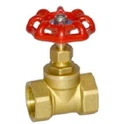
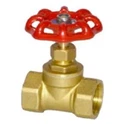
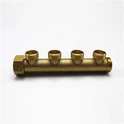
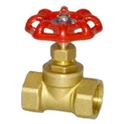
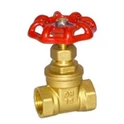
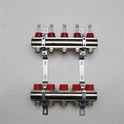
Hey there! I'm a supplier of brass fittings, and today I want to dig into a question that often pops up: Can brass fittings be used in desalination plants?
First off, let's quickly go over what desalination plants are all about. Desalination is the process of removing salt and other impurities from seawater or brackish water to make it suitable for drinking, industrial use, and agriculture. These plants are super important, especially in areas where freshwater is scarce. They use different methods like reverse osmosis, distillation, and electrodialysis to get the job done.
Now, let's talk about brass fittings. Brass is an alloy made mainly of copper and zinc, and it's been around for ages. It's known for being easy to work with, having good corrosion resistance, and looking pretty nice. That's why it's used in all sorts of applications, from plumbing in our homes to industrial setups.
Advantages of Using Brass Fittings in Desalination Plants
One of the big pluses of brass fittings is their corrosion resistance. In a desalination plant, the environment is pretty harsh. The water is full of salts and other chemicals that can eat away at metals. But brass has a natural ability to form a protective layer on its surface, which helps it resist corrosion to a certain extent. This means the fittings can last longer, reducing the need for frequent replacements and saving money in the long run.
Brass is also really malleable. That means it can be shaped into all kinds of complex fittings, like elbows, tees, and couplings. In a desalination plant, the piping system is often very intricate, with lots of different connections. Having fittings that can be customized to fit the specific needs of the system is a huge advantage.
Another benefit is its thermal conductivity. In some desalination processes, like distillation, heat transfer is crucial. Brass can conduct heat well, which helps in maintaining the right temperature throughout the system. This can improve the efficiency of the desalination process and reduce energy consumption.
Challenges and Limitations
However, it's not all sunshine and rainbows. There are some challenges when using brass fittings in desalination plants. One of the main issues is the presence of certain chemicals in the water. For example, chloride ions, which are abundant in seawater, can cause stress corrosion cracking in brass. This is a type of corrosion that happens when the metal is under stress and exposed to a corrosive environment. If not addressed, it can lead to leaks and failures in the piping system.
Another problem is dezincification. This is a process where the zinc in the brass gets leached out, leaving behind a porous and weak copper-rich layer. Dezincification can occur in water with high pH levels or in the presence of certain chemicals. It can seriously weaken the fittings and reduce their lifespan.
Mitigating the Risks
To overcome these challenges, there are several things that can be done. One option is to use special types of brass that are more resistant to corrosion. For example, some brass alloys are formulated with additives like tin or arsenic to improve their resistance to dezincification. These alloys can be a better choice for desalination plants.
Proper water treatment is also crucial. By controlling the pH, temperature, and chemical composition of the water, the risk of corrosion can be significantly reduced. This might involve adding chemicals to the water to inhibit corrosion or using filtration systems to remove impurities.
Regular maintenance and inspection are also essential. By checking the fittings regularly for signs of corrosion or damage, any issues can be detected early and fixed before they become major problems.
Our Brass Fittings for Desalination Plants
As a brass fittings supplier, we offer a wide range of products that are suitable for desalination plants. Our Pex Fitting for Gas is designed to be durable and resistant to corrosion, making it a great choice for gas lines in desalination plants. Our Brass Fitting Sleeve is perfect for joining pipes securely, even in harsh environments. And our Y-Type Brass Filter can help remove impurities from the water, reducing the risk of corrosion in the system.
We understand the unique requirements of desalination plants, and we work closely with our customers to provide the best solutions. Whether you need standard fittings or custom-made products, we've got you covered.
Conclusion
So, can brass fittings be used in desalination plants? The answer is yes, but with some considerations. While brass has many advantages, it also has its limitations. By choosing the right type of brass, implementing proper water treatment, and conducting regular maintenance, brass fittings can be a reliable and cost-effective option for desalination plants.


If you're in the market for brass fittings for your desalination plant, I'd love to hear from you. Let's have a chat about your specific needs and see how we can work together to find the best solutions. Contact us to start the conversation and let's get your project on the right track.
References
- Jones, D. A. (1992). Principles and Prevention of Corrosion. Prentice Hall.
- Uhlig, H. H., & Revie, R. W. (1985). Corrosion and Corrosion Control: An Introduction to Corrosion Science and Engineering. Wiley.