Hey there! As a supplier of brass manifolds, I often get asked whether brass manifolds are easy to repair. Well, let's dive right into this topic and break it down.
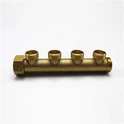
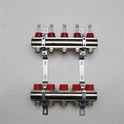
First off, what are brass manifolds? Brass manifolds are essentially a crucial part in many systems. They're used to distribute fluid or gas from a single source to multiple outlets or vice versa. You can find them in various applications, like in heating and cooling systems, plumbing setups, and even in some industrial machinery.
Now, let's talk about the factors that make brass manifolds relatively easy to repair. One of the biggest advantages of brass is its malleability. Unlike some other metals, brass can be bent, shaped, and worked on without too much hassle. This means that if a part of the manifold gets dented or slightly deformed, it can often be fixed by a skilled technician using basic tools. For example, if there's a small kink in a brass tube of the manifold, a simple pair of pliers and some gentle force can usually straighten it out.
Another great thing about brass is its corrosion - resistance. Brass contains copper and zinc, which form a protective layer on the surface when exposed to air. This layer helps prevent rust and other forms of corrosion. So, even if the manifold has been in use for a long time, chances are it won't have suffered severe damage from rust. In cases where there is some minor corrosion, it can be removed using common household cleaners or specialized brass cleaners. Once the corrosion is gone, the manifold can be inspected for any underlying damage and then put back into service.
When it comes to leaks, brass manifolds are also fairly straightforward to deal with. Leaks can occur at the joints or connections. If it's a simple leak at a threaded connection, tightening the fitting might do the trick. Sometimes, a bit of Teflon tape can be wrapped around the threads to create a better seal. For more serious leaks, like those in the body of the manifold, welding or brazing can be used. Welding brass requires some skill, but it's a well - established technique. A professional welder can repair a cracked or damaged section of the manifold by melting the brass and fusing the pieces back together.
Let's take a look at some specific types of brass manifolds. The Switch Valve Manifold is used to control the flow of fluids or gases by switching between different paths. If there's an issue with the valve mechanism, it can often be disassembled, cleaned, and reassembled. The parts of a switch valve manifold are usually standardized, so finding replacement parts is not too difficult.
The Flowmeter Manifold is designed to measure the flow rate of a fluid or gas. If the flowmeter itself is malfunctioning, it can be removed and calibrated or replaced. The manifold part of it, if damaged, can be repaired using the same techniques as other brass manifolds. For example, if there's a blockage in the manifold that's affecting the flow measurement, it can be cleared by flushing the system with an appropriate cleaning solution.
The Temperature Control Manifold is used to regulate the temperature of a fluid or gas. If the temperature - sensing element or the control valve is not working properly, they can be replaced. And if there are any leaks or structural damage in the manifold, the repair methods we've discussed earlier can be applied.
However, it's not all sunshine and rainbows. There are some situations where repairing brass manifolds can be a bit tricky. For instance, if the manifold has been exposed to extreme temperatures or pressures, it might have suffered internal damage that's not immediately visible. In such cases, a thorough inspection using non - destructive testing methods like ultrasonic testing or X - ray inspection might be required. These tests can detect cracks or weaknesses inside the manifold that could lead to future failures.
Also, if the manifold is very old or has been poorly maintained, it might have multiple issues that are difficult to address. In some cases, it might be more cost - effective to replace the entire manifold rather than trying to repair it. But this decision should be made after a careful assessment of the situation.
In conclusion, brass manifolds are generally easy to repair. Their physical properties, like malleability and corrosion - resistance, make them suitable for various repair techniques. Whether it's a simple leak, a bent tube, or a damaged valve, there are ways to fix brass manifolds. And with the availability of replacement parts and the skills of professional technicians, most problems can be resolved without too much trouble.
If you're in the market for brass manifolds or need advice on their repair and maintenance, don't hesitate to reach out. We're here to help you make the best decisions for your needs. Whether it's a Switch Valve Manifold, a Flowmeter Manifold, or a Temperature Control Manifold, we've got you covered. Contact us to start a conversation about your requirements.
References:


- General knowledge of brass properties and metalworking techniques
- Industry experience in supplying and maintaining brass manifolds