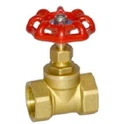
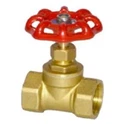
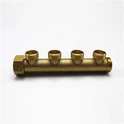
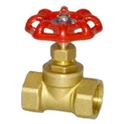
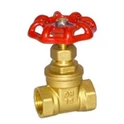
Hey there! As a supplier of brass ball valves, I often get asked, "Are brass ball valves fire-safe?" It's a crucial question, especially in industries where fire safety is a top priority. So, let's dive into this topic and find out the deal with brass ball valves and fire safety.
First off, let's understand what makes a valve fire-safe. A fire-safe valve is designed to maintain its functionality and prevent the leakage of flammable fluids or gases during a fire. This is super important because any leakage can fuel the fire and make the situation even more dangerous.
Brass is an alloy made primarily of copper and zinc. It has some properties that can work in its favor when it comes to fire safety. One of the good things about brass is its relatively high melting point. Copper, which is a major component of brass, has a melting point of around 1084°C (1983°F), and zinc has a melting point of about 419.5°C (787.1°F). The combination in brass gives it a decent heat resistance compared to some other materials.
However, just having a high melting point doesn't automatically make a brass ball valve fire-safe. There are other factors to consider. For example, the design of the valve is crucial. A well-designed brass ball valve should have proper seals and seats that can withstand high temperatures without failing. If the seals melt or break during a fire, it can lead to leakage, which defeats the purpose of having a fire-safe valve.
In some industrial applications, brass ball valves are used in systems where the risk of fire is present but not extremely high. For instance, in some low-pressure water or gas distribution systems, brass ball valves can be a cost-effective and reliable option. But in high-risk environments, like oil refineries or chemical plants, more specialized fire-safe valves might be required.
Let's talk about the different types of brass ball valves we offer. We have the Ball Valve with Cap 1/2". This valve is great for small-scale applications where you need a reliable shut-off valve. The cap provides an extra layer of protection and can help prevent debris from getting into the valve.
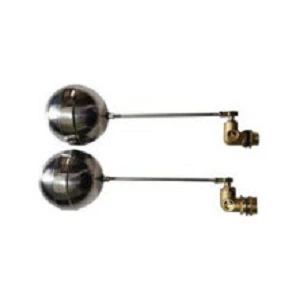
Another type is the Brass Ball Float Valve. This valve is commonly used in water tanks and other liquid storage systems. It works based on the principle of a floating ball that controls the flow of liquid. While it might not be specifically designed for fire safety, it's an important part of many systems that need to maintain a proper liquid level.
We also have the Forged Brass Ball Valve. Forged valves are generally stronger and more durable than cast valves. The forging process aligns the metal grains, which gives the valve better mechanical properties. This can be an advantage in terms of fire safety because a stronger valve is more likely to withstand the stresses of a fire.
Now, to determine if a brass ball valve is fire-safe, it's important to look at the valve's certification. There are industry standards and certifications that indicate a valve's fire-safe capabilities. For example, the API 607 standard is widely recognized for testing the fire-safe performance of quarter-turn valves, including ball valves. If a brass ball valve meets this standard, it has been tested and proven to perform well in a fire situation.
But here's the thing. Just because a valve has a certification doesn't mean it's suitable for every fire-prone application. You need to consider the specific conditions of your system, such as the type of fluid or gas being transported, the pressure, and the temperature. For example, if you're dealing with highly flammable gases at high pressures, you might need a valve with even more stringent fire-safe features.
In some cases, additional fire protection measures can be taken with brass ball valves. For example, you can install fire-proof insulation around the valve to reduce the heat transfer and protect the valve from direct flames. This can help extend the valve's functionality during a fire.
So, are brass ball valves fire-safe? The answer is, it depends. They can be a good option in many situations, especially when they are well-designed, properly installed, and meet relevant fire-safe standards. But in high-risk environments, you might need to take extra precautions or consider other types of fire-safe valves.
If you're in the market for brass ball valves and are concerned about fire safety, we're here to help. We can provide you with detailed information about the fire-safe features of our valves and help you choose the right one for your application. Whether you need a small [Ball Valve with Cap 1/2"] or a more heavy-duty [Forged Brass Ball Valve], we've got you covered.
Don't hesitate to reach out if you have any questions or want to discuss your specific requirements. We're always happy to have a chat and find the best solution for you.
References

- API 607 Standard for Fire - Tested Quarter - Turn Valves
- Technical literature on brass alloys and their properties