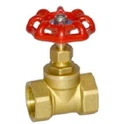
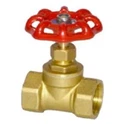
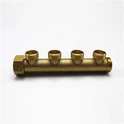
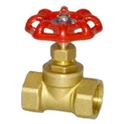
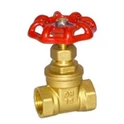
When it comes to industrial valves, brass globe valves have long been a popular choice due to their versatility, durability, and relatively low cost. Among the many performance characteristics that define a high - quality brass globe valve, erosion resistance is a crucial factor that directly impacts its service life and functionality. As a supplier of brass globe valves, I am well - versed in the significance of erosion resistance and would like to delve into this topic in detail to help you understand why it matters in your operations.
Understanding Erosion in Valves
Erosion in valves occurs when the valve components are subject to the abrasive action of fluid flow. This fluid can be a gas or a liquid, and it may carry solid particles such as sand, silt, or other debris. The high - velocity flow of these fluids, along with the presence of abrasive particles, can gradually wear away the valve's internal surfaces. In the case of a brass globe valve, erosion typically affects the valve seat, the disc, and the body.
The valve seat is particularly vulnerable to erosion because it is the area where the disc makes contact to control the flow. Any wear on the seat can lead to leakage, reduced flow control, and ultimately, a loss of system efficiency. The disc, which moves up and down to regulate the flow, also experiences significant erosion, especially at the edges where the fluid flow is most turbulent. The body of the valve can also be eroded, which may weaken its structural integrity over time.
Factors Affecting the Erosion Resistance of Brass Globe Valves
1. Brass Composition
The composition of the brass used in the valve plays a crucial role in its erosion resistance. Different types of brass alloys have varying levels of hardness, ductility, and corrosion resistance. For example, naval brass, which contains zinc, copper, and a small amount of tin, is known for its excellent resistance to corrosion and erosion in marine environments. The tin in naval brass forms a protective oxide layer on the surface, which helps to prevent the abrasive action of the fluid and solid particles.
2. Fluid Properties
The properties of the fluid flowing through the valve, such as its velocity, density, and the presence of solid particles, have a direct impact on erosion. Higher fluid velocities increase the kinetic energy of the flowing particles, making them more abrasive. A fluid with a high density also exerts more force on the valve surfaces, causing faster erosion. Additionally, the size, shape, and hardness of the solid particles carried by the fluid can significantly affect the erosion rate. Sharp - edged particles are generally more abrasive than round particles.
3. Design of the Valve
The design of the brass globe valve can also influence its erosion resistance. Valves with smooth internal surfaces and well - designed flow paths tend to experience less erosion because the fluid can flow more evenly, reducing turbulence and the impact of abrasive particles. For example, a valve with a streamlined body and a properly shaped disc can minimize the formation of eddies, which are often the main cause of local erosion.


Testing the Erosion Resistance of Brass Globe Valves
To ensure that our United Brass Globe Valve meets the highest standards of erosion resistance, we conduct a series of rigorous tests. One common method is the slurry erosion test, where the valve is exposed to a fluid containing a known concentration of abrasive particles. The test is run for a specified period, and the weight loss of the valve components is measured to determine the rate of erosion.
Another test method is the high - velocity gas erosion test, which is used to simulate the conditions in high - pressure gas systems. In this test, the valve is subjected to a high - velocity gas stream containing abrasive particles, and the erosion damage to the valve surfaces is evaluated using microscopy and other non - destructive testing techniques.
Applications and the Importance of Erosion Resistance
Brass globe valves are used in a wide range of applications, including water supply systems, heating systems, and industrial processes. In water supply systems, erosion resistance is crucial to ensure a long - term reliable water delivery. If the valves in a water distribution network are eroded, they may leak, leading to water loss and potential water quality issues.
In heating systems, brass globe valves are used to control the flow of hot water or steam. Erosion in these valves can cause a decrease in heating efficiency, increased energy consumption, and even system failures. For industrial processes, especially those involving the handling of abrasive fluids or gases, the erosion resistance of brass globe valves is essential to maintain the stability and safety of the production process.
Our Product Range and Erosion Resistance
We offer a diverse range of brass globe valves, including the 200 WOG Globe Valve and 200 WOG Globe Valve. Our valves are made from high - quality brass alloys that are carefully selected for their excellent erosion - resistant properties. Through advanced manufacturing techniques and strict quality control, we ensure that each valve can withstand the harsh conditions of different applications.
In addition to the selection of materials, our engineering team also pays great attention to the design of the valves. We strive to create valves with smooth internal surfaces and optimized flow paths to minimize erosion. Our valves are also designed to be easy to maintain, which can further extend their service life.
Contact Us for Your Brass Globe Valve Needs
If you are in the market for high - performance brass globe valves with excellent erosion resistance, we are here to help. Our team of experts can provide you with detailed technical information, product recommendations based on your specific requirements, and competitive pricing. Whether you need a small - scale valve for a residential project or a large - scale valve for an industrial application, we have the right solution for you.
Don't hesitate to reach out to us for a consultation and to start the procurement process. We are committed to providing you with the best products and services to ensure the success of your projects.
References
- ASM Handbook Committee. (2000). ASM Handbook Volume 13C: Corrosion: Prevention and Control. ASM International.
- Valve Manufacturers Association. (2015). Valve Selection and Application Guide. VMA.