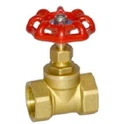
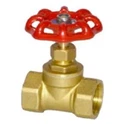
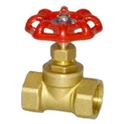
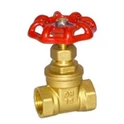
Hey there! I'm a supplier of 200 WOG Globe Valves, and today I wanna talk about how the internal structure of a valve can have a big impact on the flow pattern.
First off, let's get a basic understanding of what a 200 WOG Globe Valve is. A 200 WOG (Water, Oil, Gas) Globe Valve is designed to control the flow of fluids in a pipeline. You can check out more details about it on this page: 200 WOG Globe Valve. These valves are widely used in various industries because they offer good shut - off capabilities and relatively precise flow control.
Now, let's dig into the internal structure of the globe valve and how it affects the flow pattern.
The Seat and Disk
The seat and disk are two crucial parts of a globe valve. The seat is a stationary ring inside the valve body, and the disk is the movable part that comes into contact with the seat to either allow or restrict the flow of fluid. When the disk is fully open, it is lifted far away from the seat, creating a relatively large passage for the fluid to flow through. The flow pattern in this case is somewhat smooth, but there can still be some minor turbulence near the edges of the seat and disk due to the sudden change in the cross - sectional area of the flow path.


However, when the disk starts to close and gets closer to the seat, the flow area between them decreases significantly. This causes an increase in the fluid velocity according to the principle of continuity (Q = A×V, where Q is the flow rate, A is the cross - sectional area, and V is the velocity). As the velocity increases, the flow becomes more turbulent. The fluid has to squeeze through a smaller opening, and this creates eddies and vortices. These turbulent flow patterns can lead to higher pressure drops across the valve. Higher pressure drops mean more energy is wasted in the form of heat, and it can also cause noise and vibration in the pipeline.
The Bonnet and Stem
The bonnet is the part that covers the top of the valve body and houses the stem. The stem is connected to the disk and is used to move the disk up and down. The design of the bonnet and stem can also affect the flow pattern. If the bonnet has a smooth internal surface, it will have less impact on the flow. But if there are any rough edges or protrusions inside the bonnet, it can disrupt the flow and create additional turbulence.
The stem, when it moves through the bonnet, can also cause some flow disturbances. For example, if the stem is not centered properly, it can create an uneven flow distribution around the disk. This can lead to an unbalanced force on the disk, which may cause it to vibrate and further disrupt the flow pattern.
Flow Direction
Globe valves are usually designed for a specific flow direction. Most of the time, the fluid is supposed to flow under the disk (from the bottom to the top). When the fluid flows in the correct direction, the pressure exerted on the disk helps to keep it in place when the valve is closed. It also allows for a more stable flow pattern when the valve is open.
If the fluid flows in the wrong direction, say from the top to the bottom, the pressure on the disk can make it more difficult to open and close the valve. Moreover, the flow pattern will be more chaotic. The fluid will hit the disk in an unfavorable way, creating more turbulence and increasing the pressure drop.
Different Types of Globe Valves and Their Flow Patterns
Let's take a look at some specific types of globe valves and how their internal structures affect the flow.
Round Handwheel Brass Globe Valve 1/2"
The Round Handwheel Brass Globe Valve 1/2" is a popular choice for small - scale applications. The brass material gives it good corrosion resistance. In terms of flow, its relatively small size means that the flow path is shorter and more restricted compared to larger valves. This can lead to higher velocities and more turbulence, especially when the valve is partially open.
The round handwheel is used to operate the valve. The way it is connected to the stem can also influence the smoothness of the disk movement. If the connection is loose or has some play, it can cause the disk to move erratically, which will disrupt the flow pattern.
PPR Brass Globe Valve
The PPR Brass Globe Valve combines the advantages of PPR (Polypropylene Random Copolymer) and brass. The PPR part is often used for its excellent chemical resistance and smooth internal surface, which can help to reduce the friction and turbulence of the fluid flow.
The brass components, such as the seat and disk, provide the necessary strength and durability. The interface between the PPR and brass parts needs to be well - designed to ensure a seamless flow path. Any misalignment or rough transition at this interface can cause flow disturbances.
Impact on System Performance
The flow pattern affected by the valve's internal structure has a significant impact on the overall system performance.
Energy Efficiency
As mentioned earlier, turbulent flow patterns lead to higher pressure drops. In a pipeline system, pumps are used to move the fluid. Higher pressure drops mean the pumps have to work harder to maintain the desired flow rate. This increases the energy consumption of the system. For large - scale industrial applications, this can result in substantial cost increases over time.
Noise and Vibration
Turbulent flow can cause noise and vibration in the pipeline. The eddies and vortices create pressure fluctuations that can be transmitted through the fluid and the pipeline walls. These vibrations can damage the pipeline and other components in the long run. Noise can also be a nuisance in work environments and may even violate noise regulations in some areas.
Erosion and Wear
The high - velocity and turbulent flow can cause erosion and wear on the internal surfaces of the valve. The fluid can carry small particles, and when they hit the seat, disk, and other parts of the valve at high speeds, they can gradually wear away the material. This can lead to leakage and reduced valve performance over time.
Choosing the Right Valve for the Application
To minimize the negative effects of the flow pattern on the system, it's important to choose the right valve for the specific application. Consider the flow rate, pressure, and the type of fluid. If you need a valve for a system where a smooth flow is critical, you may want to look for a valve with a more streamlined internal structure.
If you're interested in our 200 WOG Globe Valves or have any questions about how they can fit into your system, don't hesitate to get in touch with us for a procurement discussion. We can help you choose the right valve based on your specific requirements and ensure that it performs optimally in your application.
References
- Miller, D. S. (1990). Internal Flow Systems. BHRA Fluid Engineering.
- Idelchik, I. E. (1994). Handbook of Hydraulic Resistance. Begell House.