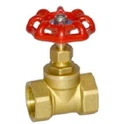
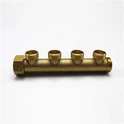
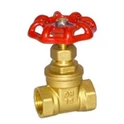
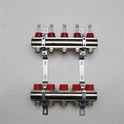
As a supplier of Manifold Tail Pieces, I've witnessed firsthand the critical role these components play in preventing leaks across various industries. In this blog, I'll delve into the science and engineering behind how a Manifold Tail Piece effectively prevents leaks, exploring its design, materials, and installation techniques.
Understanding the Basics of a Manifold Tail Piece
A Manifold Tail Piece is a crucial part of a manifold system, which is used to distribute or collect fluids or gases in a controlled manner. The Manifold Tail Piece serves as a connection point between the manifold and other components, such as pipes, valves, or instruments. Its primary function is to ensure a secure and leak - free connection, which is essential for the proper operation of the entire system.
Design Features that Prevent Leaks
Precision Machining
One of the key factors in preventing leaks is the precision machining of the Manifold Tail Piece. High - quality suppliers use advanced machining techniques to ensure that the dimensions of the tail piece are accurate within very tight tolerances. This precision is crucial because even a slight deviation in size can lead to gaps between the components, allowing fluids or gases to escape. For example, the threads on the tail piece must be machined to the correct pitch and diameter to ensure a proper fit with the mating part. If the threads are too loose, there will be a risk of leakage; if they are too tight, it can damage the components during installation.
Sealing Surfaces
The sealing surfaces of a Manifold Tail Piece are designed to create a tight seal. These surfaces are often smooth and flat, which allows for better contact with the corresponding sealing surfaces of other components. Some tail pieces have special grooves or channels that can accommodate gaskets or O - rings. These sealing elements are made of materials such as rubber or silicone, which are flexible and can conform to the shape of the mating surfaces, filling any small irregularities and preventing leaks. For instance, in a hydraulic system, an O - ring in the Manifold Tail Piece can effectively seal the high - pressure fluid, preventing it from seeping out.
Shape and Configuration
The shape and configuration of the Manifold Tail Piece also contribute to leak prevention. Some tail pieces are designed with a tapered end, which can provide a self - centering and self - sealing effect when inserted into a corresponding socket. This design helps to align the components correctly and ensures a tight fit, reducing the likelihood of leaks. Additionally, the overall shape of the tail piece can be optimized to minimize stress concentrations, which can cause cracks or deformation over time and lead to leaks.
Materials Selection for Leak Prevention
Corrosion - Resistant Materials
The choice of materials for a Manifold Tail Piece is vital in preventing leaks. Corrosion can weaken the structure of the tail piece and create holes or cracks through which fluids or gases can escape. Therefore, many Manifold Tail Pieces are made from corrosion - resistant materials such as brass, stainless steel, or plastic. Brass is a popular choice because it has good corrosion resistance, is relatively easy to machine, and has excellent thermal conductivity. Stainless steel, on the other hand, offers high strength and superior corrosion resistance, making it suitable for applications in harsh environments. Plastic materials can be used in applications where weight, cost, or chemical resistance is a priority.
Material Compatibility
In addition to corrosion resistance, material compatibility is also important. The Manifold Tail Piece must be compatible with the fluid or gas it will be handling, as well as the other components in the system. For example, if the fluid is highly acidic, a material that is resistant to acid corrosion must be selected. Using incompatible materials can lead to chemical reactions that can degrade the tail piece and cause leaks.
Installation Techniques for Leak - Free Connections
Proper Torque Application
During installation, proper torque application is crucial for preventing leaks. Over - tightening the Manifold Tail Piece can damage the threads or the sealing surfaces, while under - tightening can result in a loose connection. Most manufacturers provide torque specifications for their tail pieces, which should be followed carefully. Using a torque wrench can ensure that the correct amount of torque is applied, creating a secure and leak - free connection.
Cleaning and Preparation
Before installation, the components must be cleaned and prepared properly. Any dirt, debris, or old sealing material on the surfaces of the Manifold Tail Piece or the mating part can prevent a proper seal. Cleaning the surfaces with a suitable solvent and ensuring they are dry can improve the sealing performance. Additionally, applying a thin layer of lubricant or sealant to the threads or sealing surfaces can help to create a better seal and prevent leaks.
Alignment
Correct alignment of the Manifold Tail Piece with the mating part is essential. Misalignment can cause uneven stress on the sealing surfaces, leading to leaks. During installation, care should be taken to ensure that the tail piece is inserted straight and centered, and that there is no angular or lateral misalignment.
Applications and the Importance of Leak Prevention
Industrial Applications
In industrial settings, such as manufacturing plants and refineries, Manifold Tail Pieces are used in a wide range of systems, including hydraulic, pneumatic, and chemical processing systems. Leaks in these systems can have serious consequences, such as product loss, environmental pollution, and safety hazards. For example, in a chemical processing plant, a leak of a hazardous chemical can pose a significant risk to the health of workers and the environment. Therefore, reliable Manifold Tail Pieces are essential to ensure the safe and efficient operation of these systems.
Commercial and Residential Applications
In commercial and residential applications, Manifold Tail Pieces are commonly used in plumbing and heating systems. Leaks in these systems can lead to water damage, increased energy consumption, and higher utility bills. For instance, a leak in a hot water manifold can waste a significant amount of energy as the system has to constantly heat the leaking water. By using high - quality Manifold Tail Pieces and following proper installation techniques, these problems can be avoided.
Related Manifold Products
In addition to Manifold Tail Pieces, we also offer other related manifold products, such as Flowmeter Manifolds and Temperature Control Manifolds. These products are designed to work together to provide a comprehensive solution for fluid and gas distribution and control. Flowmeter Manifolds are used to measure the flow rate of fluids or gases accurately, while Temperature Control Manifolds help to regulate the temperature of the medium. All of our products are designed with leak prevention in mind, ensuring reliable performance in various applications.
Conclusion and Call to Action
In conclusion, a Manifold Tail Piece plays a vital role in preventing leaks through its precision design, appropriate material selection, and proper installation techniques. Whether in industrial, commercial, or residential applications, a leak - free connection is essential for the safe and efficient operation of the system.
If you are in need of high - quality Manifold Tail Pieces or other manifold products, we are here to help. Our products are manufactured to the highest standards, ensuring reliable performance and leak prevention. Contact us today to discuss your specific requirements and start a procurement negotiation. We look forward to serving you and providing you with the best solutions for your manifold needs.


References
- "Fluid Power Systems" by Anthony Esposito
- "Piping Handbook" by Cameron Engineering and Associates
- "Mechanical Seals and Their Applications" by A. J. Burrows