As a seasoned supplier of Ball Union Valves, I've encountered numerous inquiries regarding the necessity of special actuators for these valves. In this blog post, I aim to delve into this topic, providing insights based on industry knowledge and practical experience.
Understanding Ball Union Valves
Before discussing the need for special actuators, it's essential to understand what Ball Union Valves are. These valves are a type of quarter - turn valve that uses a hollow, perforated, and pivoting ball to control flow through it. When the ball's hole is in line with the flow path, the valve is open, allowing fluid to pass. When the ball is rotated a quarter - turn, the solid part of the ball blocks the flow path, closing the valve.
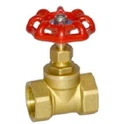
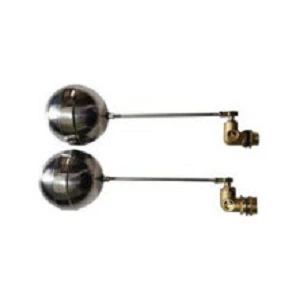
Ball Union Valves are known for their durability, tight shut - off capabilities, and relatively low pressure drop. They are widely used in various industries, including oil and gas, water treatment, chemical processing, and HVAC systems. Our company offers a diverse range of Ball Union Valves, such as the Ball Valve for Temperature Measurement, Butterfly Handle Ball Valve 1", and Brass Ball Float Valve, each designed to meet specific application requirements.
The Role of Actuators in Valve Operation
Actuators are devices used to open and close valves. They provide the necessary force to move the valve's closure element (in the case of Ball Union Valves, the ball) between the open and closed positions. There are several types of actuators, including manual, electric, pneumatic, and hydraulic actuators.
Manual actuators are the simplest form, where an operator uses a handle or a wheel to turn the valve. They are cost - effective and suitable for applications where valve operation is infrequent or where a small amount of force is required. Electric actuators use an electric motor to drive the valve, offering precise control and the ability to be integrated into automated control systems. Pneumatic actuators use compressed air to generate the required force, providing fast operation and high torque. Hydraulic actuators, on the other hand, use hydraulic fluid to operate the valve and are capable of delivering very high forces.
Do Ball Union Valves Need a Special Actuator?
The answer to whether Ball Union Valves need a special actuator depends on several factors:
1. Application Requirements
In some applications, standard actuators may be sufficient. For example, in a small - scale water distribution system where the pressure is relatively low and the valve operation is infrequent, a manual actuator can be used to operate the Ball Union Valve. The operator can easily turn the handle to open or close the valve.
However, in more demanding applications, such as in the oil and gas industry where high pressures and large valve sizes are common, special actuators may be required. These actuators need to be able to generate enough torque to turn the ball against the high - pressure forces acting on it. Pneumatic or hydraulic actuators are often used in such applications due to their ability to deliver high forces.
2. Automation and Control
If the Ball Union Valve is part of an automated control system, a special actuator may be needed. Electric actuators are commonly used in automated systems as they can be easily integrated with programmable logic controllers (PLCs) and other control devices. These actuators can be programmed to open or close the valve at specific times or in response to certain process variables, such as pressure, temperature, or flow rate.
For example, in a chemical processing plant, an electric actuator can be used to control the flow of a corrosive chemical through a Ball Union Valve based on the process requirements. The actuator can be programmed to open the valve to a certain degree to maintain a specific flow rate, ensuring the safety and efficiency of the process.
3. Valve Size and Design
The size and design of the Ball Union Valve also play a role in determining the need for a special actuator. Larger valves generally require more force to operate, and thus may need more powerful actuators. Additionally, some Ball Union Valves may have unique designs, such as those with extended stems or special sealing arrangements, which may require actuators with specific features to ensure proper operation.
For instance, a large - diameter Ball Union Valve with a high - pressure rating may need a hydraulic actuator to provide the necessary torque to turn the ball. The actuator needs to be carefully selected to match the valve's specifications and ensure reliable operation.
Selecting the Right Actuator for Ball Union Valves
When selecting an actuator for Ball Union Valves, the following steps should be considered:
1. Determine the Application Requirements
Understand the operating conditions of the valve, including the pressure, temperature, flow rate, and frequency of operation. This will help in choosing the appropriate type of actuator. For high - pressure applications, pneumatic or hydraulic actuators may be more suitable, while for low - pressure and infrequent operation, manual or electric actuators can be considered.
2. Calculate the Required Torque
The torque required to operate the Ball Union Valve depends on several factors, such as the valve size, pressure differential, and friction in the valve. Manufacturers usually provide torque calculation guidelines based on the valve's specifications. By calculating the required torque, the appropriate actuator can be selected to ensure that it has enough power to open and close the valve.
3. Consider the Actuator's Features
In addition to the torque capacity, other features of the actuator should also be considered. These include the speed of operation, control options, and environmental compatibility. For example, in a hazardous environment, explosion - proof actuators may be required to ensure safety.
Conclusion
In conclusion, whether Ball Union Valves need a special actuator depends on the specific application requirements, the level of automation, and the valve's size and design. While standard actuators may be sufficient for some applications, more demanding scenarios may call for special actuators with specific features and capabilities.

As a supplier of Ball Union Valves, we understand the importance of selecting the right actuator for each application. We offer a wide range of actuators to meet the diverse needs of our customers. If you are in the process of selecting a Ball Union Valve and an appropriate actuator for your project, we encourage you to contact us for professional advice and assistance. Our team of experts is ready to help you find the best solutions for your valve and actuator needs.
References
- Valve Handbook, 4th Edition, by J. A. Schweitzer
- Piping and Pipeline Engineering: Design, Construction, Maintenance, Integrity, and Repair, by George A. Antaki